
Teaching Exams 2026: CTET and Teacher Eligibility Tests, Pattern, Dates and Preparation
A Teacher Eligibility Test (TET) is one of the minimum qualifications for a teacher of Classes I to VIII under the RTE Act and the guidelines of the National Council for Teacher Education (NCTE). It gives an eligibility certificate, not a job. The Central Teacher Eligibility Test (CTET), conducted by CBSE, is the TET for Central Government schools such as KVS and NVS, and States hold their own TETs. GK24 covers CTET so far; its 22nd edition is on 12 and 13 December 2026. This page explains what a TET is, how CTET is used in recruitment, its papers and dates as per the CTET-September 2026 bulletin and later CBSE notices, and where GK24's GK notes, quizzes and current affairs help.
Prepare for Teaching
Exams under Teaching
CTET
CTET is the CBSE eligibility test for teachers of Classes I to VIII. Paper I and Paper II pattern, eligibility, fee, the 12 and 13 December 2026 exam dates, qualifying marks and certificate validity as per the CTET September 2026 bulletin.
Latest Teaching Current Affairs
View all- National
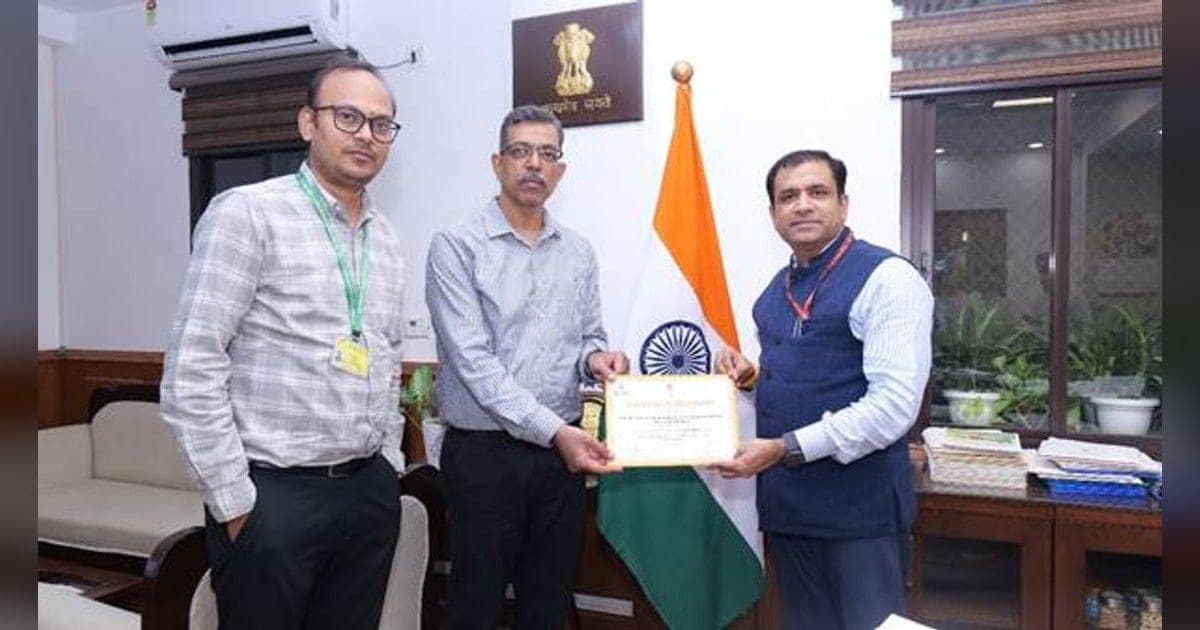
MANAGE Hyderabad Named Centre of Excellence-Skills by MSDE
The National Institute of Agricultural Extension Management, Hyderabad has been recognised as a Centre of Excellence-Skills in the agriculture sector by MSDE.
4 November 2026 · 2 min read
- Government Schemes
MSDE and Assam Sign MoU for Skill India International Centre
2 November 2026 · 2 min read
- National
JanHIT: First National Orientation of Tribal Healers at Hyderabad
2 November 2026 · 2 min read
- National
Sacred Piprahwa Buddha Relics Reach Tawang Monastery in Arunachal
2 November 2026 · 2 min read



Teaching Practice Quizzes
View all- Current Affairs Quiz
Teaching Current Affairs Quiz: 2 November 2026
14 questions14 minutesStart Quiz - Current Affairs Quiz
CTET Current Affairs Quiz: 2 November 2026
14 questions14 minutesStart Quiz - Current Affairs Quiz
Teaching Weekly Current Affairs Quiz: 26 October – 1 November 2026
30 questions30 minutesStart Quiz - Current Affairs Quiz
CTET Weekly Current Affairs Quiz: 26 October – 1 November 2026
30 questions30 minutesStart Quiz - Current Affairs Quiz
CTET Current Affairs Quiz: 31 October 2026
19 questions19 minutesStart Quiz - Current Affairs Quiz
Teaching Current Affairs Quiz: October 2026
50 questions50 minutesStart Quiz
Teaching exams at a glance
A Teacher Eligibility Test (TET) decides who is eligible to be appointed as a school teacher of Classes I to VIII. It is not a recruitment exam. Under sub-section (1) of Section 23 of the Right of Children to Free and Compulsory Education (RTE) Act, 2009, the National Council for Teacher Education (NCTE) laid down the minimum qualifications for teachers of Classes I to VIII by its notification of 23 August 2010. One of them is passing a TET conducted by the appropriate Government in accordance with NCTE's guidelines. NCTE issued those guidelines on 11 February 2011.
NCTE's guidelines give three reasons for the test. It brings national standards and a benchmark of teacher quality into recruitment. It pushes teacher education institutions and their students to raise their standards. It signals that the Government lays special emphasis on teacher quality.
A TET gives a certificate, not a job. The CTET bulletin says qualifying CTET does not confer a right to recruitment or employment, as it is only one of the eligibility criteria for appointment. Teaching posts are filled later through separate recruitment.
GK24 covers one teaching exam so far: the Central Teacher Eligibility Test (CTET). The table below is as per the CTET-September 2026 Information Bulletin of the Central Board of Secondary Education (CBSE) and its public notices up to 14 September 2026.
| Item | CTET |
|---|---|
| Conducting body | CBSE, Delhi, entrusted by the Ministry of Education |
| Papers | Paper I and Paper II |
| Classes | Paper I: Classes I to V (Primary Stage). Paper II: Classes VI to VIII (Elementary Stage) |
| Questions | 150 multiple-choice questions per paper, one mark each |
| Qualifying mark | 60% or more (90 or more out of 150) |
| Certificate validity | Lifetime, for all categories |
| Attempts | No limit; a qualified candidate may sit again to improve the score |
| Next exam | 12 and 13 December 2026 (22nd edition) |
CTET and recruitment
The CTET-September 2026 bulletin lists where CTET applies.
- Schools of the Central Government, such as Kendriya Vidyalayas (KVS), Navodaya Vidyalayas (NVS) and Central Tibetan Schools.
- Schools under the administrative control of the Union Territories of Chandigarh, Dadra and Nagar Haveli, Daman and Diu, Andaman and Nicobar Islands, Lakshadweep and the NCT of Delhi.
- Unaided private schools, which may choose to consider CTET.
- Schools affiliated to CBSE, where teachers of Classes I to VIII appointed from 6 March 2012 must pass CTET or a TET conducted by the appropriate Central or State Government under NCTE's guidelines.
The bulletin says school managements should give weightage to CTET scores in recruitment. This covers government, local body, government-aided and unaided schools. They may also consider concessions for SC, ST, OBC and differently abled candidates under their own reservation policy. CTET itself does not lower the 60% mark for any category.
State TETs
States conduct their own TETs. The bulletin says schools owned and managed by a State Government or local bodies, and aided schools, consider the TET conducted by that State Government. A State Government can also consider CTET if it decides not to conduct a State TET. NCTE's 2011 guidelines add that such schools may also accept a TET certificate awarded by another State or UT with legislature. The same guidelines say the appropriate Government should conduct a TET at least once every year.
NCTE's amendment of 9 June 2021 covers the validity of all TET certificates. A TET qualifying certificate for appointment now remains valid for life, unless the appropriate Government notifies otherwise. The change applies from 11 February 2011. Before it, validity was capped at seven years.
Recruitment is a separate step
A CTET or State TET certificate lets a candidate compete for teaching posts. The bulletin says the minimum qualifications of teachers follow NCTE's regulations and the recruitment rules of the Government where the school is situated, or of KVS or NVS. State boards such as DSSSB recruit teachers. Each recruitment has its own notification, pattern, eligibility and dates, and the recruiting agency verifies eligibility finally.
How CTET is structured
As per the CTET-September 2026 bulletin, CTET has two papers. Paper I is for a person who intends to teach Classes I to V. Paper II is for Classes VI to VIII. A person who intends to teach at both levels takes both papers.
All questions are multiple-choice, with four options and one most appropriate answer. Each question carries one mark. There is no negative marking. Each paper lasts 2 hours 30 minutes. The test is offline: answers are marked on an OMR sheet with a blue or black ball point pen. The main question paper is bilingual (Hindi/English). Language I and Language II are chosen from 27 languages.
Paper I (Classes I to V)
| Section | Questions | Marks |
|---|---|---|
| Child Development and Pedagogy | 30 | 30 |
| Mathematics | 30 | 30 |
| Environmental Studies | 30 | 30 |
| Language I | 30 | 30 |
| Language II | 30 | 30 |
| Total | 150 | 150 |
Paper II (Classes VI to VIII)
| Section | Questions | Marks |
|---|---|---|
| Child Development and Pedagogy (compulsory) | 30 | 30 |
| Mathematics and Science, or Social Studies/Social Science | 60 | 60 |
| Language I (compulsory) | 30 | 30 |
| Language II (compulsory) | 30 | 30 |
| Total | 150 | 150 |
In Paper II, a Mathematics and Science teacher takes Mathematics and Science. A Social Studies/Social Science teacher takes Social Studies/Social Science. Any other teacher may take either.
Questions follow the NCERT syllabus of Classes I to V for Paper I and Classes VI to VIII for Paper II. Their difficulty can go up to the Secondary stage in Paper I and the Senior Secondary stage in Paper II. Much of every subject is pedagogy. In Paper I, 15 of the 30 Environmental Studies questions are on pedagogical issues. In Paper II, 20 of the 60 Social Studies/Social Science questions are. CTET has no general awareness or current affairs section.
CTET dates
CBSE's notice of 25 August 2026 says 21 editions of CTET have been held so far. The 22nd edition is the current one. Its dates are as per the bulletin and the notices of 8 May, 25 August and 14 September 2026. The status column is as of 24 September 2026.
| Event | Date | Status |
|---|---|---|
| Online application, first window | 11 May to 10 June 2026 | Closed |
| Application window reopened | 25 August to 1 September 2026 | Closed |
| Exam | 12 and 13 December 2026 | Announced on 14 September 2026 |
| Each candidate's exam city and date | On the CTET portal 15 days before the exam | Not yet released |
| Admit card | On the CTET portal two days before the exam | Not yet released |
| Result | No date announced | The earlier tentative date has lapsed |
The notice of 8 May 2026 first fixed the exam for 6 September 2026. It gave the end of October 2026 as a tentative result date. On 25 August 2026 CBSE reopened applications. It cited a Supreme Court judgment that stressed a reasonable opportunity for eligible teachers to acquire the prescribed TET qualification. Candidates who had already applied did not need to apply again. The notice of 14 September 2026 then set 12 and 13 December 2026. CBSE allots each candidate's city and date, and the bulletin says requests to change them are not accepted. No new result date has been announced. State TETs follow their own calendars, and this page does not list them.
Where GK24 helps a teaching aspirant
GK24 is a general knowledge and current affairs site. It does not teach Child Development and Pedagogy, the languages, Mathematics or the pedagogy questions. Together these make up most of each CTET paper. The table below is GK24's guidance, not part of the bulletin.
| Part of CTET | What the bulletin lists | GK24 material that helps |
|---|---|---|
| Paper I: Environmental Studies content (15 questions) | Family and Friends, Food, Shelter, Water, Travel, Things We Make and Do | GK notes and quizzes on geography, general science, and environment and ecology |
| Paper II: Social Studies/Social Science content (40 questions) | History, Geography, Social and Political Life | GK notes and quizzes on Indian history, geography and Indian polity |
| Paper II: Science content (20 questions) | Food, Materials, The World of the Living, How things work, Natural Phenomena, Natural Resources | GK notes and quizzes on general science |
| Child Development and Pedagogy, languages, Mathematics and all pedagogy questions | Teaching and learning | Not covered by GK24; use the NCERT textbooks and the bulletin syllabus |
Daily current affairs are not tested in CTET. In GK24's view they still help in two ways. First, they keep a teaching aspirant aware of education-policy news, such as teacher eligibility, schools and schemes for students. Second, a recruitment exam or interview held after the TET is separate from CTET. If that recruitment has a general awareness part or an interview, daily current affairs help there. Check its own notification for the pattern.
How to prepare with GK24
This plan is GK24's guidance for the content parts of CTET only. It works alongside the NCERT textbooks and the bulletin syllabus, not in place of them.
- Choose your paper first. Paper I needs Environmental Studies. Paper II needs Social Studies/Social Science or Mathematics and Science. Your GK24 reading follows that choice.
- Read the NCERT chapter, then the GK24 note. For Paper I, read the geography, general science and environment notes. For Paper II Social Studies, read Indian history, geography and the Indian polity notes on the Constitution, Parliament and the judiciary.
- Take the topic quiz after each note. Reread only the parts you got wrong, and track your accuracy by subject.
- Solve previous-year questions on the CTET page. They show how facts from history, geography, polity and science are framed. Add the answer keys CBSE publishes after each edition.
- Study pedagogy alongside. Half of Environmental Studies in Paper I and a third of Social Studies in Paper II is pedagogy, which GK24 does not cover.
- Give current affairs about ten minutes a day. CTET does not test it, so keep it short and focus on education and environment items.
- Keep the last weeks for full papers. With the exam on 12 and 13 December 2026, finish content revision early and practise full 150-question papers in 2 hours 30 minutes.
Frequently Asked Questions
Is CTET a recruitment exam?
No. CTET is an eligibility test. The CTET-September 2026 bulletin says qualifying CTET does not confer a right to recruitment or employment, as it is only one of the eligibility criteria for appointment. Posts are filled through separate recruitment, and the bulletin asks school managements to give weightage to CTET scores in it.
What is the difference between CTET and a State TET?
CTET is conducted by CBSE for the Central Government. As per the bulletin, it applies to Central Government schools such as KVS, NVS and Central Tibetan Schools, to schools of the listed Union Territories and the NCT of Delhi, and unaided private schools may consider it. Schools of a State Government or local bodies, and aided schools, consider that State's TET. A State that decides not to conduct its own TET can consider CTET.
How long is a CTET certificate valid?
The bulletin says the CTET qualifying certificate is valid for life for all categories. There is no limit on attempts, and a qualified candidate may sit again to improve the score. For TETs in general, NCTE's amendment of 9 June 2021 makes the certificate valid for life unless the appropriate Government notifies otherwise.
What are the qualifying marks in CTET?
A candidate who scores 60% or more is considered TET pass, as per NCTE's notification of 11 February 2011. In CTET that is 90 or more out of 150. The bulletin does not lower this for any category; it says school managements may consider concessions under their reservation policy.
When is the next CTET?
CBSE's notice of 14 September 2026 says the 22nd edition of CTET will be held on 12 and 13 December 2026. Each candidate's exam city and date will appear on the CTET portal 15 days before the exam, and the admit card two days before it. No result date has been announced.
Does CTET have a GK or current affairs section?
No. Each paper has Child Development and Pedagogy, Language I, Language II and subject sections. In GK24's guidance, general knowledge helps only in the content part of Environmental Studies in Paper I and of Social Studies/Social Science and Science in Paper II.
How does GK24 help a teaching aspirant?
GK24's GK notes and quizzes on geography, history, polity, general science and environment support the content parts of Environmental Studies, Social Studies and Science. Daily current affairs help with education-policy news and with any later recruitment exam or interview that has a general awareness part. GK24 does not cover pedagogy, languages or Mathematics. This is GK24's guidance.