
RRB JE 2026: Exam Pattern, Syllabus, Eligibility, Dates and Preparation
The Junior Engineer (JE) recruitment is held by the Railway Recruitment Boards (RRBs) of the Ministry of Railways to fill Level-6 posts in the zonal railways and production units: Junior Engineer in the Civil, Electrical, Mechanical and Signal and Telecommunication departments, Depot Material Superintendent and Chemical & Metallurgical Assistant. Centralised Employment Notice (CEN) 04/2026, with its first corrigendum, notifies 4,029 vacancies across 21 RRBs. Selection runs through two computer based tests, document verification and a medical examination. General Awareness and General Science carry 45 of the 100 marks in CBT-1. This page gives the pattern, the syllabus, eligibility, dates and posts as per CEN 04/2026, with GK24's daily current affairs, GK notes, quizzes and previous-year questions for the exam.
Prepare for RRB JE
Latest RRB JE Current Affairs
View all- Environment
Cabinet Clears Rs 14,500 Crore VGF for 92 GWh Energy Storage
The Union Cabinet approved a Rs 14,500 crore Viability Gap Funding scheme to build 92 GWh of grid-scale energy storage, including 60 GWh of pumped storage.
4 November 2026 · 2 min read
- Science & Technology
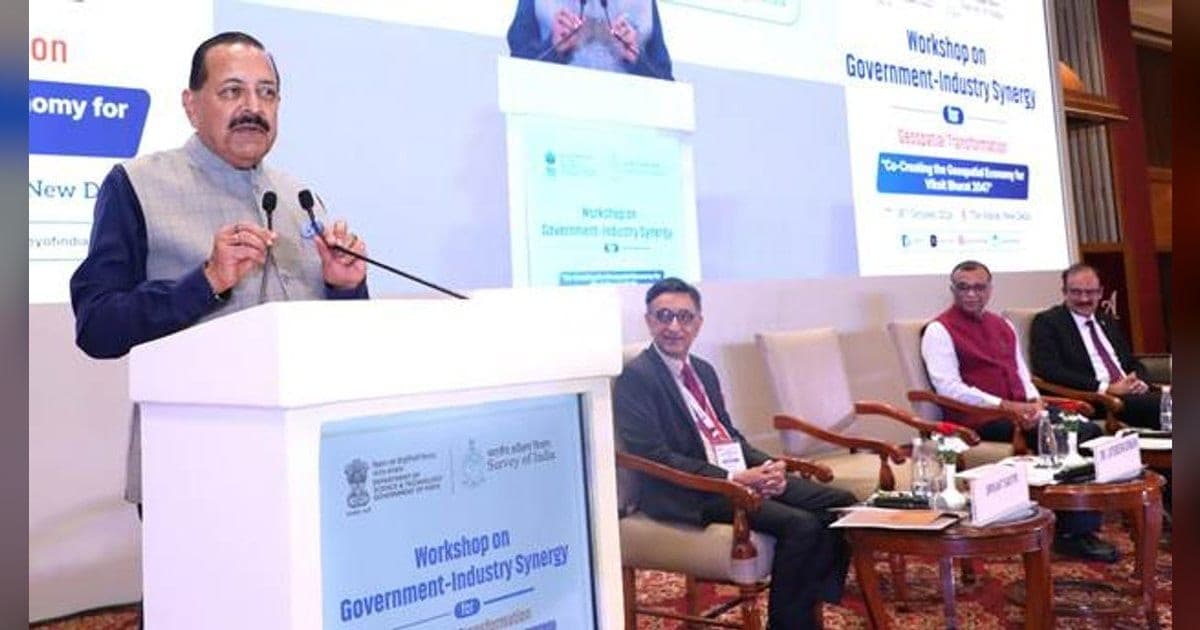
Survey of India Workshop Charts Geospatial Economy Plan
30 October 2026 · 2 min read
- Science & Technology
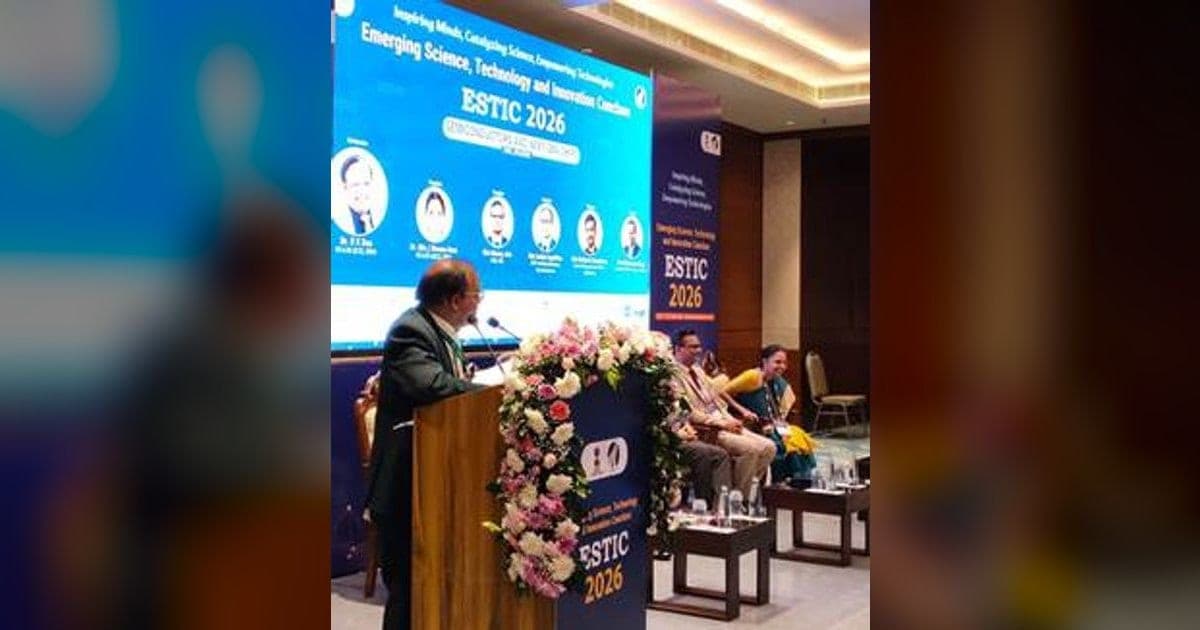
DRDO Leads Semiconductor Session at ESTIC 2026 in Delhi
30 October 2026 · 2 min read
- Science & Technology
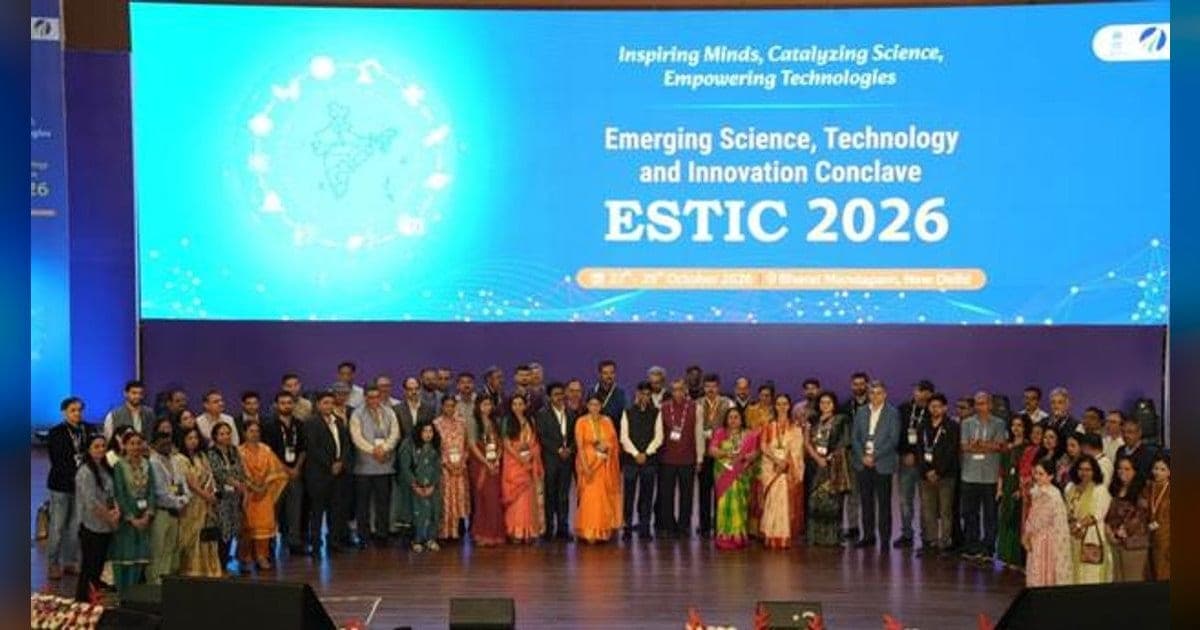
ESTIC 2026 Session Takes Up Physical AI and Robotics
29 October 2026 · 2 min read
- National
Indian Railways to Recruit 1,265 Station Masters Under CEN 08/2026
27 October 2026 · 2 min read

RRB JE Practice Quizzes
View all- Current Affairs Quiz
RRB JE Weekly Current Affairs Quiz: 26 October – 1 November 2026
22 questions22 minutesStart Quiz - Current Affairs Quiz
RRB JE Current Affairs Quiz: October 2026
50 questions50 minutesStart Quiz - GK Quiz
General Science Quiz: Interference, Diffraction and Polarisation of Light
11 questions11 minutesStart Quiz - Current Affairs Quiz
RRB JE Current Affairs Quiz: 26 October 2026
10 questions10 minutesStart Quiz - GK Quiz
General Science Quiz: Centre of Gravity, Torque and Equilibrium
12 questions12 minutesStart Quiz - Current Affairs Quiz
RRB JE Weekly Current Affairs Quiz: 19–25 October 2026
16 questions16 minutesStart Quiz
RRB JE at a glance
These facts are as per the Detailed Centralised Employment Notice (CEN) No. 04/2026, published on the RRB websites on 13 August 2026, its Corrigendum-1 of 18 August 2026 and the RRBs' notice of 16 September 2026 on the CBT-I schedule.
| Item | Detail |
|---|---|
| Conducting body | Railway Recruitment Boards (RRBs), Ministry of Railways, Government of India |
| Notice | CEN No. 04/2026 (JE/DMS/CMA) |
| Posts | Various posts of Junior Engineer (JE), Depot Material Superintendent (DMS) and Chemical & Metallurgical Assistant (CMA) |
| Vacancies | 4,029 across 21 RRBs: 3,993 in the CEN, plus 1 Junior Engineer/Electrical/TRS post and 35 CMA posts added by Corrigendum-1 |
| Pay | Level 6 of the 7th CPC pay matrix, initial pay ₹35,400 |
| Stages | CBT-1, CBT-2, Document Verification (DV), Medical Examination (ME) |
| CBT-1 | 100 questions, 100 marks, 90 minutes, common for all posts |
| CBT-2 | 150 questions, 150 marks, 120 minutes, with a technical section by exam group |
| Negative marking | One-third of the marks of a question for each wrong answer, in both CBTs |
| Qualification | Three-year Diploma in Engineering in the listed disciplines (B.E./B.Tech in the same discipline accepted); B.Sc in Physics and Chemistry with 45% marks for CMA |
| Age limit | 18–33 years as on 1 January 2027, with relaxations |
| Application fee | ₹500; ₹250 for SC, ST, Ex-Servicemen, PwBD, female, transgender, minority and EBC candidates; refunded on appearing in CBT-1 (₹400 of the ₹500) |
| CBT-1 dates | 27, 28 and 30 October 2026 (tentative) |
| Official site | rrb.indianrailways.gov.in |
Selection process
- Online application through the official RRB websites, to one RRB only, with preferences for the posts and railway zones that RRB has notified. Applying to more than one RRB, or twice to the same RRB, leads to rejection of all applications and debarment. The chosen RRB cannot be changed.
- CBT-1, common for all posts. It is a screening test: its normalised score is used only to shortlist candidates for CBT-2. Each RRB shortlists 15 times its community-wise vacancies, in order of merit, and the Railways may raise or lower this limit.
- CBT-2, with four common sections and a Technical Abilities section set by the candidate's exam group. Marks of papers held in several sessions are normalised and converted into a Merit Index, so that candidates of different exam groups can be ranked on one list for a common post.
- Document Verification. Candidates are called RRB-wise on their CBT-2 merit and post options, in number equal to the vacancies (1:1). Original certificates must be produced on the day; no extra time is given.
- Medical Examination by the Railway Administration, to the medical standard of the post (A-3, B-1, B-2 or C-1). A candidate found unfit for the opted post gets no alternative appointment, but may prefer one medical appeal on payment.
- Empanelment and allotment. The RRB allots the post and the railway zone or production unit on merit, options, medical standard and vacancies, and recommends the names. The offer of appointment is issued by the Railway Administration.
The minimum marks for eligibility in both CBTs are 40% for UR and EWS, 30% for OBC (NCL) and SC, and 25% for ST, applied to Ex-Servicemen by their community. They may be relaxed by 2 marks for PwBD candidates if there are not enough PwBD candidates for the vacancies reserved for them. In the Merit Index, the qualifying mark of 40 is set at a score of 350 and the mean of the top 0.1% (or top 10) candidates of the paper at 900. Equal marks are resolved by age, the older candidate ranking higher, and then by the alphabetical order of the given name.
Exam pattern
CBT-1 (common for all posts)
| Subject | Questions | Marks |
|---|---|---|
| Mathematics | 30 | 30 |
| General Intelligence & Reasoning | 25 | 25 |
| General Awareness | 15 | 15 |
| General Science | 30 | 30 |
| Total | 100 | 100 |
Time is 90 minutes, or 120 minutes for candidates eligible for a scribe. The CEN calls the section-wise split indicative, so actual papers may vary a little. Each wrong answer costs one-third mark. Calculators are not allowed. Questions are generally of the standard of the qualifications prescribed for the posts.
CBT-2
| Subject | Questions | Marks |
|---|---|---|
| General Awareness | 15 | 15 |
| Physics & Chemistry | 15 | 15 |
| Basics of Computers and Applications | 10 | 10 |
| Basics of Environment and Pollution Control | 10 | 10 |
| Technical Abilities | 100 | 100 |
| Total | 150 | 150 |
Time is 120 minutes, or 160 minutes with a scribe. The first four sections are common to all posts. Technical Abilities follows the syllabus of the candidate's exam group. A virtual calculator is shown on screen in CBT-2. Negative marking is one-third mark per wrong answer, as in CBT-1.
Exam groups for Technical Abilities
| Exam group | Qualifications mapped to it |
|---|---|
| Mechanical and Allied Engineering | Mechanical, Production, Automobile, Manufacturing, Mechatronics, Industrial, Machining, Tools and Machining, Tools and Die Making Engineering |
| Electrical and Allied Engineering | Electrical Engineering |
| Electronics and Allied Engineering | Electronics, Instrumentation and Control, Communication, Computer Science and Engineering, Computer Engineering, Computer Science, Information Technology |
| Civil and Allied Engineering | Civil Engineering; B.Sc in Civil Engineering of three years |
| CMA | B.Sc in Physics and Chemistry |
Combinations of sub-streams of these basic streams map to the same group. A candidate whose qualifications fall in two groups picks one of them. DMS applicants with a diploma in any other discipline choose any group except CMA.
General Awareness and General Science syllabus
CEN 04/2026 gives one General Awareness syllabus for both CBT-1 and CBT-2. It tests knowledge of:
- Current affairs
- Indian geography
- Culture and history of India, including the freedom struggle
- Indian Polity and Constitution
- Indian Economy
- Environmental issues concerning India and the world
- Sports
- General scientific and technological developments
General Science in CBT-1 is Physics, Chemistry and Life Sciences up to the 10th Standard CBSE syllabus. Physics and Chemistry in CBT-2 is also up to the 10th Standard CBSE syllabus. Basics of Environment and Pollution Control in CBT-2 covers the basics of environment, the adverse effects of pollution and control strategies, air, water and noise pollution, waste management, global warming, acid rain and ozone depletion. Basics of Computers and Applications covers computer architecture, input, output and storage devices, networking, operating systems, MS Office, data representation, the internet and email, websites and browsers, and computer viruses.
Guidance, not the CEN: this is how GK24's content maps to those topics.
| Topic in the CEN | Where it is on GK24 |
|---|---|
| Current affairs, sports, scientific and technological developments | Daily current affairs for RRB JE and their quizzes; Sports GK notes |
| Geography, history and culture, freedom struggle, Polity and Constitution, Economy | Topic-wise GK notes on Geography, Indian History, Art and Culture, Indian Polity and Indian Economy |
| Environmental issues; Basics of Environment and Pollution Control | GK notes on Environment and Ecology (pollution, climate change, ozone layer and acid rain), with environment news in current affairs |
| General Science; Physics and Chemistry | General Science notes at Class 10 level |
| Basics of Computers and Applications | Computer notes |
Together the knowledge sections (General Awareness and General Science) carry 45 of the 100 marks in CBT-1. In CBT-2, General Awareness, Physics and Chemistry and Environment carry 40 of the 150 marks, and Computers another 10. CBT-2 decides who is called for DV, so its 15 General Awareness questions count as much as those of CBT-1.
Eligibility and age limit
Nationality
A candidate must be a citizen of India or Nepal, a subject of Bhutan, or a person of Indian origin who has migrated from Pakistan, Burma, Sri Lanka, Kenya, Uganda, Tanzania, Zambia, Malawi, Zaire, Ethiopia or Vietnam to settle permanently in India. Candidates other than Indian citizens need a certificate of eligibility from the Government of India.
Educational qualification
| Posts | Minimum qualification |
|---|---|
| JE posts in the Electrical department; JE/Diesel Electrical | Three-year Diploma in Mechanical, Electrical or Electronics Engineering, or a combination of their sub-streams |
| JE posts in Civil Engineering (Bridge, P. Way, Works, Civil, Research, Design, Design Drawing and Estimation) | Three-year Diploma in Civil Engineering or a three-year B.Sc in Civil Engineering, or a combination of sub-streams of Civil Engineering |
| JE/Track Machine | Three-year Diploma in Mechanical, Production, Automobile, Electrical, Electronics or Instrumentation and Control Engineering |
| JE posts in the Mechanical department (Carriage and Wagon, Diesel Mechanical, Mechanical, Workshop, Millwright, Design) | Three-year Diploma in Mechanical, Electrical, Electronics, Manufacturing, Mechatronics, Industrial, Machining, Instrumentation and Control, Tools and Machining, Tools and Die Making, Automobile or Production Engineering |
| JE posts in Signal and Telecommunication | Three-year Diploma in Electrical, Electronics, Information Technology, Communication Engineering, Computer Science and Engineering, Computer Science or Computer Engineering |
| Depot Material Superintendent | Three-year Diploma in Engineering in any discipline |
| Chemical & Metallurgical Assistant | B.Sc in Physics and Chemistry with at least 45% marks: Physics or Chemistry as the major subject with the other as a subject, or another science major with both as subjects |
A B.E. or B.Tech in the same discipline is accepted in place of the diploma. A two-year diploma is not accepted, as the CEN's FAQs state. The qualification must be held by 13 September 2026, the closing date; candidates awaiting final results are not eligible.
Age limit
The age limit is 18–33 years as on 1 January 2027.
| Community | Date of birth (both dates inclusive) |
|---|---|
| UR and EWS | 2 January 1994 to 1 January 2009 |
| OBC (NCL) | 2 January 1991 to 1 January 2009 |
| SC and ST | 2 January 1989 to 1 January 2009 |
| Category | Upper age relaxation or maximum age |
|---|---|
| SC and ST | 5 years |
| OBC (NCL) | 3 years |
| Ex-Servicemen (six months' continuous service after attestation) | 3 years (UR, EWS), 6 years (OBC-NCL), 8 years (SC, ST), after deducting the length of service |
| PwBD | 10 years (UR, EWS), 13 years (OBC-NCL), 15 years (SC, ST) |
| Serving Group C and erstwhile Group D railway staff, and substitutes, with 3 years' service | Up to 40 years (UR, EWS), 43 years (OBC-NCL), 45 years (SC, ST) |
| Staff of quasi-administrative railway offices (canteens, co-operative societies, institutes) | Length of service or 5 years, whichever is less |
| Widowed, divorced or judicially separated women not remarried | Up to 35 years (UR, EWS), 38 years (OBC-NCL), 40 years (SC, ST) |
Relaxations are not cumulative; the highest single one applies. SC, ST and OBC candidates applying against UR vacancies get no age relaxation. The date of birth must be as recorded in the Matriculation certificate.
Application fee
| Category | Fee | Refund on appearing in CBT-1 |
|---|---|---|
| All candidates not listed below | ₹500 | ₹400, less bank charges |
| SC, ST, Ex-Servicemen, PwBD, female, transgender, minorities, Economically Backward Class (EBC) | ₹250 | ₹250, less bank charges |
The fee is paid online only. The refund goes only to the candidate's Aadhaar-seeded bank account, and nothing is refunded on a rejected application. EBC means an annual family income below ₹50,000; it brings a fee concession only, not reservation. Each change made in the modification window costs ₹250.
Important dates
| Event | Date (CEN 04/2026) |
|---|---|
| Indicative notice in Employment News | 25 July 2026 |
| Detailed CEN published | 13 August 2026 |
| Online applications | 14 August to 13 September 2026 (23:59) |
| Corrigendum-1 (CMA posts added) | 18 August 2026 |
| Last date for fee payment | 15 September 2026 |
| Modification window (₹250 per occasion) | 16 to 25 September 2026 |
| Scribe details on the portal | 26 to 30 September 2026 |
| CBT-1 (tentative) | 27, 28 and 30 October 2026 |
| Exam city and date intimation | About 10 days before the exam |
| E-call letter | About 4 days before the exam |
| CBT-2, DV and Medical Examination | To be notified on the RRB websites |
The RRBs announced the CBT-1 dates in their notice of 16 September 2026. SC and ST candidates who opted for it get a free sleeper-class travel authority with the city intimation. Aadhaar-linked biometric authentication is done at the centre, so candidates must bring their original Aadhaar card or a printout of the e-verified Aadhaar and keep their Aadhaar unlocked. For reference, the previous cycle, CEN 05/2025 with 2,569 vacancies, held CBT-1 on 19, 20 and 25 February 2026 and CBT-2 on 2 July 2026.
How to prepare General Awareness for RRB JE
This plan is guidance from GK24, not part of the CEN.
- Read daily current affairs. GK24 publishes daily current affairs for RRB JE in English and Hindi, written from official releases. Cover the months before CBT-1 and revise each month at its end. Keep reading after CBT-1, because CBT-2 asks another 15 General Awareness questions months later.
- Cover static GK topic by topic. Use the GK24 GK notes for Polity and the Constitution, Modern History and the freedom struggle, Geography, the Economy and Art and Culture. Fifteen questions are spread over eight areas, so breadth beats depth.
- Treat General Science as a scoring section. It has 30 questions in CBT-1, and Physics and Chemistry another 15 in CBT-2, all at Class 10 CBSE level. Revise the General Science notes on Physics, Chemistry and Biology until definitions, units and everyday applications come without thought.
- Prepare Environment and Computers early. Twenty CBT-2 questions come from these two, on pollution and its control, waste management, global warming, acid rain, ozone depletion, operating systems, MS Office and the internet. The Environment and Ecology and Computer notes cover them.
- Solve previous-year questions. The RRB JE previous-year questions on GK24 show the depth the RRBs expect and the themes that repeat across shifts.
- Take timed quizzes. At one-third mark per wrong answer, three wrong answers cancel a right one. Practise GK24 quizzes against the clock and skip what you cannot narrow down.
Posts and pay
Every post in CEN 04/2026 is in Level 6 of the 7th CPC pay matrix, with an initial pay of ₹35,400; the CEN's FAQs confirm that the notice has only this one pay level.
| Department | Posts (as named in the CEN) | Medical standard |
|---|---|---|
| Electrical | JE/Electrical/EMU, JE/Electrical/TRD, JE/Electrical/TRS | A-3 |
| Electrical | JE/Electrical/General Services | B-1 |
| Electrical | JE/Design/Electrical (R and D) | B-2 |
| Electrical | JE/Electrical (Production Unit), JE/Electrical (Workshop), JE/Electrical/Design Drawing and Estimation | C-1 |
| Engineering (Civil) | JE/Bridge, JE/P. Way, JE/Track Machine | A-3 |
| Engineering (Civil) | JE (Research)/Civil, JE/Civil, JE/Works | B-1 (JE/Works in production units: C-1) |
| Engineering (Civil) | JE/Design/Civil | B-2 |
| Engineering (Civil) | JE/Civil/Design Drawing and Estimation | C-1 |
| Mechanical | JE/Carriage and Wagon, JE/Diesel Mechanical, JE/Diesel Electrical, Chemical & Metallurgical Assistant | B-1 |
| Mechanical | JE/Design/C and W, JE/Design/MP | B-2 |
| Mechanical | JE/Design/Mechanical, JE/Mechanical, JE/Mechanical (Workshop), JE/Mechanical/Design Drawing and Estimation, JE/Millwright | C-1 |
| Signal and Telecommunication | JE/S and T/Signal, JE/S and T/Telecommunication | A-3 |
| Signal and Telecommunication | JE/Design/S and T | B-2 |
| Signal and Telecommunication | JE/S and T (Workshop), JE/S and T/Design Drawing and Estimation | C-1 |
| Stores | Depot Material Superintendent | C-1 |
Vacancies by community
| Community | CEN (Annexure B) | Added by Corrigendum-1 | Total |
|---|---|---|---|
| UR | 1,699 | 15 | 1,714 |
| SC | 624 | 8 | 632 |
| ST | 363 | 3 | 366 |
| OBC (NCL) | 913 | 6 | 919 |
| EWS | 394 | 4 | 398 |
| Total | 3,993 | 36 | 4,029 |
The CEN also marks 387 of its 3,993 vacancies for Ex-Servicemen. The largest RRB shares in Annexure B are Kolkata (457), Mumbai (411) and Chennai (362, before 15 CMA posts were added). Vacancies are provisional and may rise or fall.
Medical standards (vision)
| Standard | Vision required |
|---|---|
| A-3 | Distance 6/9, 6/9 with or without glasses (lens power up to 2D); near Sn 0.6, 0.6; colour, binocular, night and mesopic vision tests |
| B-1 | Distance 6/9, 6/12 with or without glasses (lens power up to 4D); near Sn 0.6, 0.6; colour, binocular, night and mesopic vision tests |
| B-2 | Distance 6/9, 6/12 with or without glasses (lens power up to 4D); near Sn 0.6, 0.6; binocular vision test |
| C-1 | Distance 6/12, 6/18 with or without glasses; near Sn 0.6, 0.6 |
Candidates who have had LASIK or other refractive surgery are not eligible for A-3 posts, but may qualify for B-1 under the conditions the CEN lists. Selected candidates are paid only a stipend during training. They are liable for active service in the Railway Engineers Unit of the Territorial Army. A request for transfer to another railway is not registered until 5 to 10 years of service, so the RRB must be chosen with care.
Frequently Asked Questions
What is the RRB JE 2026 exam pattern?
As per CEN 04/2026, CBT-1 has 100 questions of one mark each in 90 minutes: Mathematics 30, General Intelligence & Reasoning 25, General Awareness 15 and General Science 30. CBT-2 has 150 questions in 120 minutes: General Awareness 15, Physics & Chemistry 15, Basics of Computers and Applications 10, Basics of Environment and Pollution Control 10 and Technical Abilities 100. CBT-1 only shortlists for CBT-2; CBT-2 decides the call for document verification.
Is there negative marking in RRB JE?
Yes. In both CBT-1 and CBT-2, one-third of the marks allotted to a question is deducted for each wrong answer. Unanswered questions carry no penalty.
When is the RRB JE CBT-1 in 2026?
The RRBs' notice of 16 September 2026 schedules CBT-1 of CEN 04/2026 tentatively on 27, 28 and 30 October 2026. The exam city and date link goes live about 10 days before the exam, and e-call letters about 4 days before. Dates of CBT-2, document verification and the medical examination are yet to be notified.
What is the age limit for RRB JE 2026?
18 to 33 years as on 1 January 2027: a UR or EWS candidate must be born between 2 January 1994 and 1 January 2009. The upper limit is relaxed by 5 years for SC and ST, 3 years for OBC (NCL) and 10 to 15 years for PwBD candidates, with other relaxations for Ex-Servicemen, serving railway staff and some women candidates.
Can a B.Tech graduate or a two-year diploma holder apply for RRB JE?
A B.E. or B.Tech in the same discipline is accepted in place of the three-year Diploma in Engineering. A two-year diploma is not accepted. The qualification must be held by 13 September 2026, the closing date of CEN 04/2026; candidates awaiting final results cannot apply.
How many General Awareness questions are there in RRB JE?
15 in CBT-1 and 15 in CBT-2, both on the same syllabus: current affairs, Indian geography, history and culture including the freedom struggle, Polity and Constitution, the Economy, environmental issues, sports and scientific developments. General Science adds 30 questions in CBT-1, and Physics and Chemistry and Environment add 25 in CBT-2.
What is the salary of an RRB JE?
All posts of CEN 04/2026, including Junior Engineer, Depot Material Superintendent and Chemical & Metallurgical Assistant, are in Level 6 of the 7th CPC pay matrix with an initial pay of ₹35,400. Selected candidates are paid only a stipend during training.