
Rajnath Singh Addresses 36th NDE Conference in Hyderabad
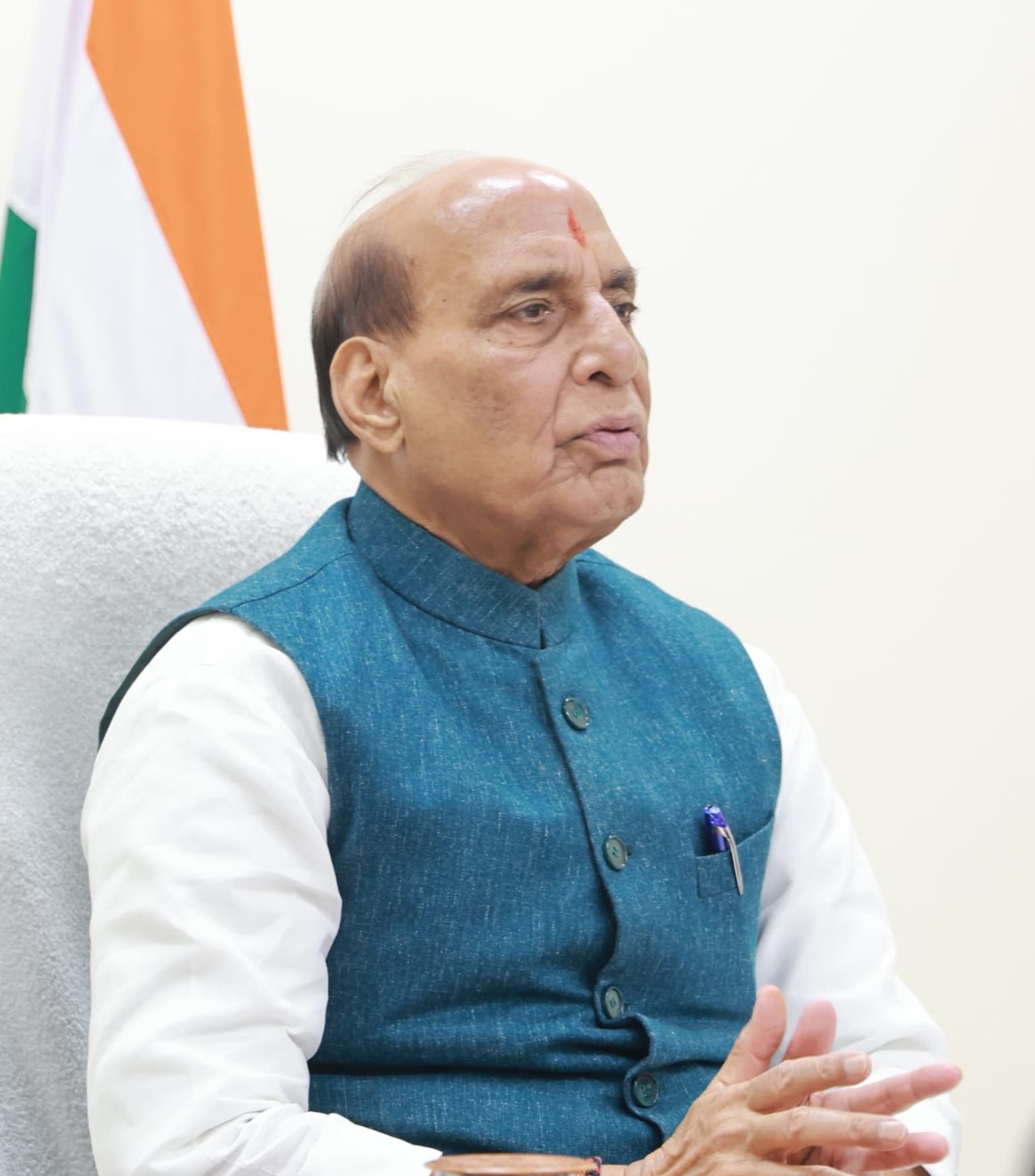
Raksha Mantri Rajnath Singh on 15 November 2026 addressed the 36th conference on non-destructive evaluation in Hyderabad, asking for indigenous inspection technology.
Why in News
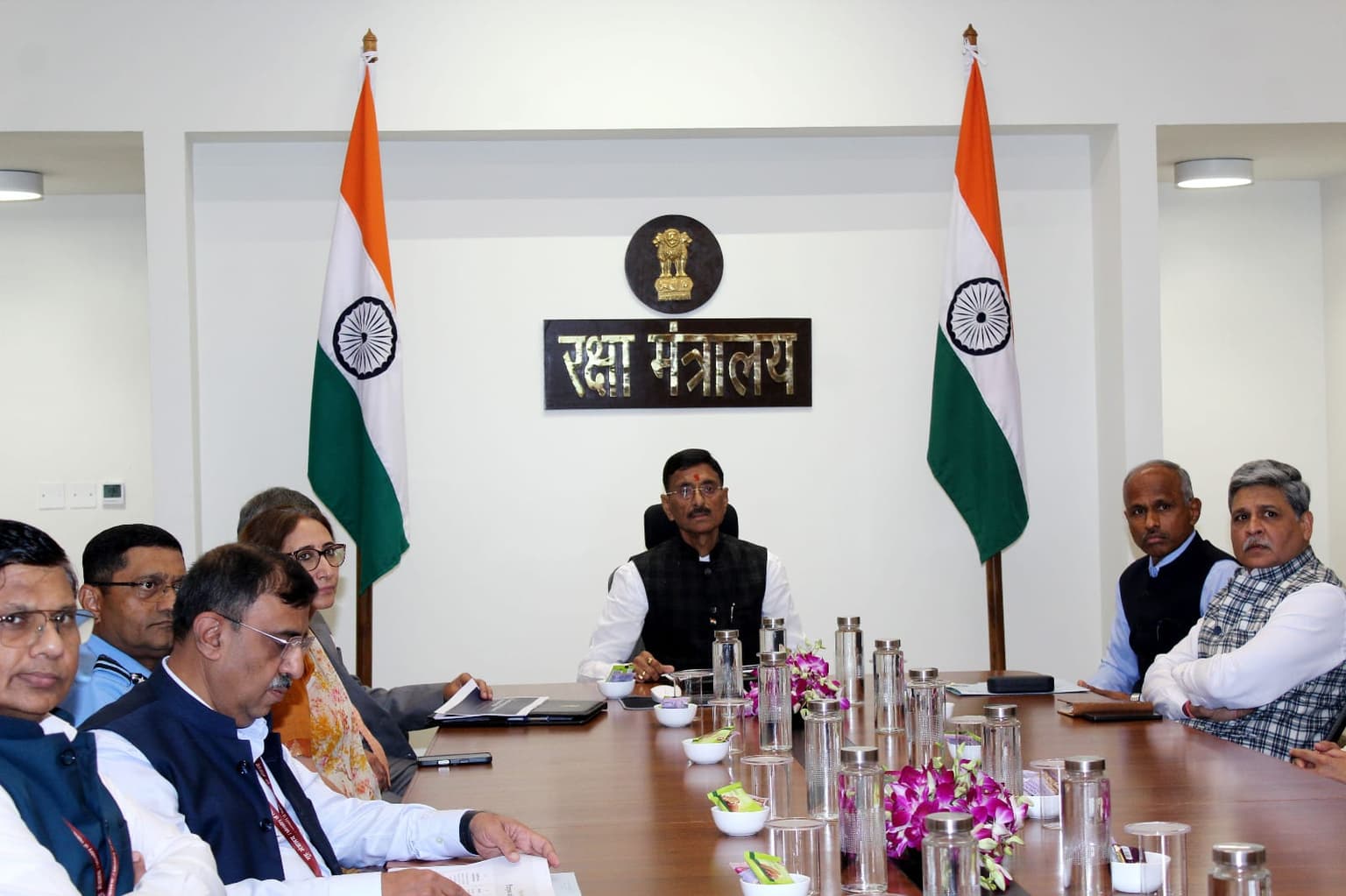
On 15 November 2026 Raksha Mantri Rajnath Singh virtually addressed the 36th Annual Conference on Non-Destructive Evaluation and Enabling Technologies and the 15th International Symposium on Non-Destructive Testing in Aerospace at Hyderabad.
Raksha Mantri Rajnath Singh on 15 November 2026 addressed, through a video link, the 36th Annual Conference on Non-Destructive Evaluation and Enabling Technologies together with the 15th International Symposium on Non-Destructive Testing in Aerospace. The three-day meeting has been organised by the Indian Society for Non-Destructive Testing at Hyderabad in Telangana, and more than 2,000 professionals, researchers, industry experts and students are taking part.
What non-destructive testing does
Non-destructive testing, or NDT, lets engineers judge whether a material, a component or a structure is sound without harming it. The Raksha Mantri drew the comparison with medicine: as ultrasound and X-rays let a doctor look inside a patient without surgery, these techniques find hidden flaws inside a critical part without taking it apart. As Indian defence systems grow more complex, he said, every material, assembly and process has to meet the highest standard, because a defect that goes unnoticed can cut the service life of equipment, raise the maintenance it needs and, at the worst moment, put a mission at risk. He asked the sector to move from merely catching defects to preventing them, with quality built in at each stage of manufacture.
The call for indigenous capability
He argued that India must not remain only a user of advanced technology but become a developer, an innovator and a global leader in critical fields. That requires home-grown strength in inspection technology, specialised sensors, evaluation equipment and the software that goes with them, which in turn reduces dependence on others and secures defence supply chains. Quality assurance practice, he said, should be consistent across the whole defence industrial base, with public sector undertakings, private manufacturers, start-ups and MSMEs all taking part, and inspection results must be accurate, reliable and traceable, resting on sound procedures, proper standards and assessment by qualified people. There can be no compromise, he insisted, on the integrity of test results in strategic uses. Self-reliance in defence, in his words, is not only an economic aim but a strategic necessity.
Technology, innovation and the ecosystem
Artificial intelligence, machine learning, robotics, advanced sensors, digital twins and predictive analytics are widening what inspection and structural health monitoring can do, making checks faster and more consistent and bringing out patterns that older methods would miss. The future, he said, lies in joining established inspection methods with these digital tools, and India should build its own solutions rather than simply buy them, investing in research, equipment, software and trained people so that Indian technology can also sell abroad. He pointed to Innovations for Defence Excellence (iDEX) and the Technology Development Fund as mechanisms that have pushed experimentation in the sector, and cited missiles, naval platforms, aerospace engineering, radar and space work as evidence of growing capability, calling the commissioning of INS Vikrant, the country's first indigenous aircraft carrier, a landmark of that journey. Innovation, he added, flourishes when government, industry, academia and research laboratories work as one, and he asked for a whole-of-government and whole-of-ecosystem approach to technological advance and strategic self-reliance.
Important Facts
| Event | 36th Annual Conference on Non-Destructive Evaluation and Enabling Technologies |
|---|---|
| Held with | 15th International Symposium on Non-Destructive Testing in Aerospace |
| Addressed by | Raksha Mantri Rajnath Singh, through a video link |
| Date | 15 November 2026 |
| Organiser | Indian Society for Non-Destructive Testing |
| Venue | Hyderabad, Telangana |
| Duration | Three days |
| Participation | More than 2,000 professionals, researchers, experts and students |
| Schemes named | Innovations for Defence Excellence (iDEX) and Technology Development Fund |
| Milestone cited | INS Vikrant, India's first indigenous aircraft carrier |
Exam Point of View
Note the edition numbers, the 36th annual conference on non-destructive evaluation and the 15th international symposium on non-destructive testing in aerospace, the organiser Indian Society for Non-Destructive Testing, the venue Hyderabad in Telangana, the participation of over 2,000 people, and the mention of iDEX, the Technology Development Fund and INS Vikrant as India's first indigenous aircraft carrier.
Practice Questions
Which body organised the three-day conference on non-destructive evaluation held at Hyderabad?
- A.Indian Society for Non-Destructive Testing
- B.Defence Research and Development Organisation
- C.Bureau of Indian Standards
- D.Council of Scientific and Industrial Research
Show answer
It organised the three-day meeting at Hyderabad in Telangana, which was the 36th Annual Conference on Non-Destructive Evaluation and Enabling Technologies, held along with the 15th International Symposium on Non-Destructive Testing in Aerospace, and drew more than 2,000 professionals, researchers, industry experts and students.
Read the full explanation →What does non-destructive testing make possible?
- A.Testing of materials only after they are dismantled
- B.Examination of materials and structures without damaging them
- C.Repair of defective components in the field
- D.Measurement of a weapon's firing range
Show answer
The Raksha Mantri explained that these technologies let engineers check the integrity of materials, components and structures without causing any harm to them, and he used a medical comparison: just as ultrasound and X-rays allow a doctor to examine the body without surgery, non-destructive techniques reveal internal defects in critical…
Read the full explanation →Which warship was cited as India's first indigenous aircraft carrier and a milestone of self-reliance?
- A.INS Vikramaditya
- B.INS Vikrant
- C.INS Arihant
- D.INS Kolkata
Show answer
In his address the Raksha Mantri described its commissioning as an important milestone in the journey towards a self-reliant India, citing it alongside achievements in missile development, naval platforms, aerospace engineering, radar systems and space applications as proof of the country's widening scientific and industrial capability.
Read the full explanation →Which two initiatives were named as having encouraged innovation and experimentation in India's defence sector?
- A.iDEX and the Technology Development Fund
- B.Make in India and Start-up India
- C.Atal Innovation Mission and PLI scheme
- D.SAMARTH and Digital India
Show answer
Innovations for Defence Excellence and the Technology Development Fund were described as important mechanisms that have encouraged innovative thinking, technological development and experimentation, and have given a new direction to the defence ecosystem.
Read the full explanation →Frequently Asked Questions
What is non-destructive testing?
It is a group of techniques that let engineers examine whether materials, components and structures are sound without damaging them. The Raksha Mantri compared it with ultrasound and X-rays, which let a doctor look inside the body without surgery; in the same way these methods detect internal defects in critical parts without dismantling them, which matters for missiles, aircraft, naval platforms and spacecraft.
Who organised the conference and where?
The Indian Society for Non-Destructive Testing organised the three-day conference at Hyderabad in Telangana. It is the 36th Annual Conference on Non-Destructive Evaluation and Enabling Technologies, held along with the 15th International Symposium on Non-Destructive Testing in Aerospace, and more than 2,000 professionals, researchers, industry experts and students are attending.
Which defence innovation initiatives did the Raksha Mantri mention?
He named Innovations for Defence Excellence, known as iDEX, and the Technology Development Fund as initiatives that have encouraged innovative thinking, technological development and experimentation in the defence sector. He also described the commissioning of INS Vikrant, the country's first indigenous aircraft carrier, as an important milestone in the self-reliance journey.
Sources
- https://www.pib.gov.in/PressReleasePage.aspx?PRID=2336449 (opens in a new tab) — Press Information Bureau
Current Affairs 15 November 2026
- Yuge Yugeen Bharat Museum Approved at Rs 3,230 Crore in DelhiNational
- Adi Vaani Now Translates Nine Tribal Languages Using AIScience & Technology
- India-Egypt Joint Trade Committee Holds 7th Session in CairoInternational
- Buddha's Sacred Relics Reach Golden Pagoda in Namsai, ArunachalState News
- Lakhpati Didi Count Reaches 3.76 Crore Against 6 Crore TargetGovernment Schemes
- Janjatiya Gaurav Divas Marked with Tributes to Birsa MundaImportant Days
- India's Space Economy at USD 9 Billion with 440 Start-upsScience & Technology
- NITI Aayog to Hold Five Workshops on 25 Years of GovernanceNational
Related Current Affairs
- Defence
Rajnath Singh Opens Air Force Commanders' Conference 2026 in Delhi
12 November 2026 · 2 min read
Related GK
- Famous Personalities of Rajasthan: Exam Notes
28 October 2026 · Rajasthan
- Districts and Divisions of Rajasthan: Exam Notes
28 October 2026 · Rajasthan
- Tourism and World Heritage Sites of Rajasthan Notes
27 October 2026 · Rajasthan
Take the Quiz
- Current Affairs Quiz
Railway Current Affairs Quiz: 15 November 2026
25 questions25 minutesStart Quiz