
PM Modi Opens ESTIC 2026 Conclave at Bharat Mandapam
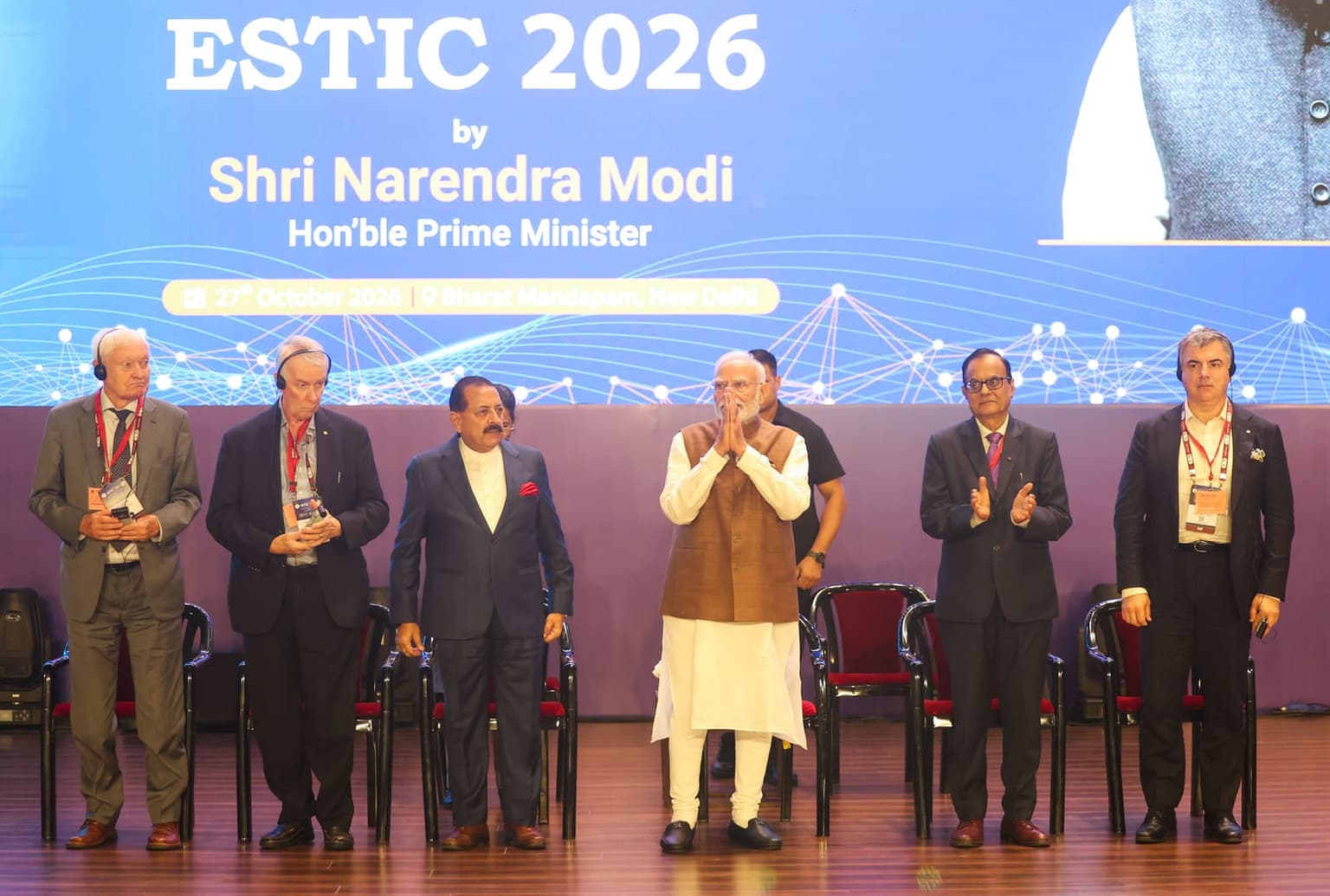
Prime Minister Narendra Modi inaugurated the Emerging Science, Technology and Innovation Conclave 2026 at Bharat Mandapam, drawing over 5,000 delegates.
Why in News
The Ministry of Science and Technology reported on 28 October 2026 that Prime Minister Narendra Modi had inaugurated the Emerging Science, Technology and Innovation Conclave (ESTIC) 2026 at Bharat Mandapam, New Delhi, on 27 October 2026, with more than 5,000 delegates, two Nobel laureate plenaries and 12 thematic priority domains.
India's effort to turn laboratory science into usable technology took centre stage on 27 October 2026, the opening day of the Emerging Science, Technology and Innovation Conclave (ESTIC) 2026 at Bharat Mandapam in New Delhi. The Ministry of Science and Technology set out the day's proceedings on 28 October 2026. More than 5,000 delegates from many countries took part, among them scientific leaders, policymakers and founders of deep-tech startups.
The Prime Minister's call
Prime Minister Narendra Modi inaugurated the conclave and asked scientists, researchers and young innovators for results that can be measured, scaled up and put to use, achieved within an operating horizon of three years. His argument was that discoveries must travel out of the laboratory to settle real problems, reinforce self-reliance under Atmanirbhar Bharat and serve human welfare. He restated the goal of setting global benchmarks in frontier fields such as artificial intelligence, quantum technologies, advanced materials and biotechnology.
From buyer to co-creator
Union Minister of State (Independent Charge) for Science and Technology and Earth Sciences Dr Jitendra Singh said the country had moved from being a buyer of technology to a future-ready co-creator of it. He put the startup count at roughly 400 in 2014 against more than 2.3 lakh today, with an estimated 50 to 60 per cent of them based in Tier-2 and Tier-3 cities. Calling India's genetic and phenotypic diversity a resource for biotechnology, he pressed for home-grown strength in gene synthesis, systems biology and nuclear medicine, and cited recent legislative reform including the SHANTI Act.
Twelve priority domains
Principal Scientific Adviser Prof. Ajay K. Sood argued for a tighter fit between basic research, industrial scale-up and regulation, and set out the conclave's 12 core thematic priority domains. Among those he named were quantum communication, semiconductor fabrication, generative and autonomous artificial intelligence, advanced manufacturing and the Deep Ocean Mission.
Two Nobel laureates
Prof. Joachim Frank of Columbia University, who won the Nobel Prize in Chemistry in 2017, gave a plenary talk on cryo-electron microscopy for target discovery and drug design, covering high-resolution single-particle work and the three-dimensional picturing of macromolecular complexes. Sir Richard J. Roberts, awarded the Nobel Prize in Physiology or Medicine in 1993, spoke on split genes, taking in gene splicing, microbial genomics and restriction-modification enzymes along with uses in agriculture, public health and diagnostics.
Sessions and the money behind them
Three parallel technical sessions ran through the day. Advanced manufacturing was chaired by CSIR Director General Dr N. Kalaiselvi, with a keynote by former DRDO Chairman Dr G. Satheesh Reddy. Generative and autonomous AI was chaired by IndiaAI Chief Executive Officer Saurabh Vijay, with a keynote by Prof. Mitesh M. Khapra of IIT Madras. The third session, on system and synthetic biology, was built around the BioE3 strategy and its Understand-Design-Build-Test-Learn cycle. An evening panel on science and disruptive technologies for Atmanirbhar Bharat was chaired by Prof. Sood. Curtain-raiser sessions had pointed to the Rs 1 lakh crore Research, Development and Innovation Fund and to ANRF mechanisms as the routes that carry deep-tech work towards commercial products.
Important Facts
| Event | Emerging Science, Technology and Innovation Conclave (ESTIC) 2026 |
|---|---|
| Venue | Bharat Mandapam, New Delhi |
| Opening day | 27 October 2026 |
| Inaugurated by | Prime Minister Narendra Modi |
| Delegates | More than 5,000 from across the world |
| Science and Technology Minister | Dr Jitendra Singh, MoS (Independent Charge) |
| Principal Scientific Adviser | Prof. Ajay K. Sood |
| Thematic priority domains | 12 |
| Nobel laureates present | Joachim Frank (Chemistry, 2017); Sir Richard J. Roberts (Physiology or Medicine, 1993) |
| Startup growth cited | About 400 in 2014 to more than 2.3 lakh today |
| Biotechnology strategy | BioE3, with the Understand-Design-Build-Test-Learn cycle |
| Funding routes named | Rs 1 lakh crore Research, Development and Innovation Fund; ANRF |
Exam Point of View
Remember the expansion of ESTIC, the venue (Bharat Mandapam, New Delhi), the opening day (27 October 2026), who inaugurated it (Prime Minister Narendra Modi), the attendance of more than 5,000 delegates, the 12 thematic priority domains set out by Principal Scientific Adviser Ajay K. Sood, the two Nobel laureates Joachim Frank (Chemistry, 2017) and Richard J. Roberts (Physiology or Medicine, 1993), the startup figures of about 400 in 2014 against over 2.3 lakh today, the BioE3 strategy and the Rs 1 lakh crore RDI Fund.
Practice Questions
Who inaugurated the Emerging Science, Technology and Innovation Conclave (ESTIC) 2026?
- A.The President of India
- B.Prime Minister Narendra Modi
- C.Dr Jitendra Singh
- D.Prof. Ajay K. Sood
Show answer
He inaugurated ESTIC 2026 at Bharat Mandapam in New Delhi on the conclave's opening day and used his address to ask scientists, researchers and young innovators for outcomes that are concrete, measurable and able to be scaled, within an operating horizon of three years.
Read the full explanation →ESTIC 2026 is organised around how many core thematic priority domains?
- A.Eight
- B.Ten
- C.Twelve
- D.Fifteen
Show answer
Prof. Ajay K. Sood, Principal Scientific Adviser to the Government of India, described the 12 core thematic priority domains around which the conclave is built, and called for closer alignment of research, industry and policy across them.
Read the full explanation →Which Nobel laureate delivered the ESTIC 2026 plenary talk on cryo-electron microscopy in target discovery and drug design?
- A.Sir Richard J. Roberts
- B.Prof. Joachim Frank
- C.Prof. Ajay K. Sood
- D.Dr Tessy Thomas
Show answer
His plenary covered cryo-electron microscopy for target discovery and drug design, including the computational and mathematical frameworks used in high-resolution single-particle work and the three-dimensional visualisation of macromolecular complexes.
Read the full explanation →According to the figures cited at ESTIC 2026, how many startups did India have in 2014?
- A.About 400
- B.About 4,000
- C.About 40,000
- D.About 1 crore
Show answer
Dr Jitendra Singh, Union Minister of State (Independent Charge) for Science and Technology and Earth Sciences, cited the growth of the startup ecosystem from roughly 400 startups in 2014 to more than 2.3 lakh today, and added that an estimated 50 to 60 per cent of them are based in…
Read the full explanation →Frequently Asked Questions
Who inaugurated ESTIC 2026 and where was it held?
Prime Minister Narendra Modi inaugurated the Emerging Science, Technology and Innovation Conclave 2026 at Bharat Mandapam, New Delhi. The opening day was 27 October 2026 and drew more than 5,000 delegates.
How many thematic priority domains is ESTIC organised around?
Twelve. Principal Scientific Adviser Prof. Ajay K. Sood described these 12 core domains, which include quantum communication, semiconductor fabrication, generative and autonomous artificial intelligence, advanced manufacturing and the Deep Ocean Mission.
Which Nobel laureates addressed the conclave?
Prof. Joachim Frank of Columbia University, the Chemistry laureate of 2017, spoke on cryo-electron microscopy, and Sir Richard J. Roberts, the Physiology or Medicine laureate of 1993, spoke on split genes and the life sciences.
What startup figures did Dr Jitendra Singh cite?
He said India had about 400 startups in 2014 and more than 2.3 lakh today, with an estimated 50 to 60 per cent of them based in Tier-2 and Tier-3 cities.
Sources
- https://www.pib.gov.in/PressReleasePage.aspx?PRID=2329291 (opens in a new tab) — Press Information Bureau
Current Affairs 28 October 2026
- Kuno Cheetah KNG22 Dies of Pellet Injuries; Centre Sends TeamEnvironment
- 14th International Tourism Mart to Open at TawangNational
Related Current Affairs
- Summits & Conferences
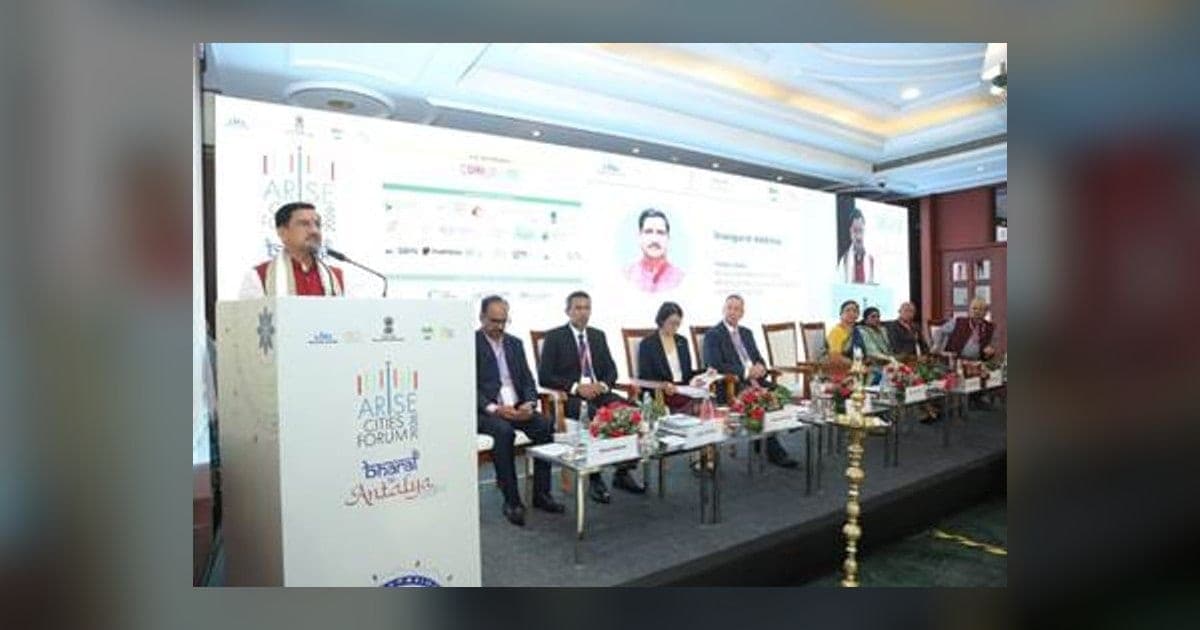
ARISE Cities Forum 2026 Opens in New Delhi for Global South
27 October 2026 · 2 min read
- Summits & Conferences
12th BRICS Parliamentary Forum Ends With Joint Declaration
27 October 2026 · 2 min read
- Summits & Conferences
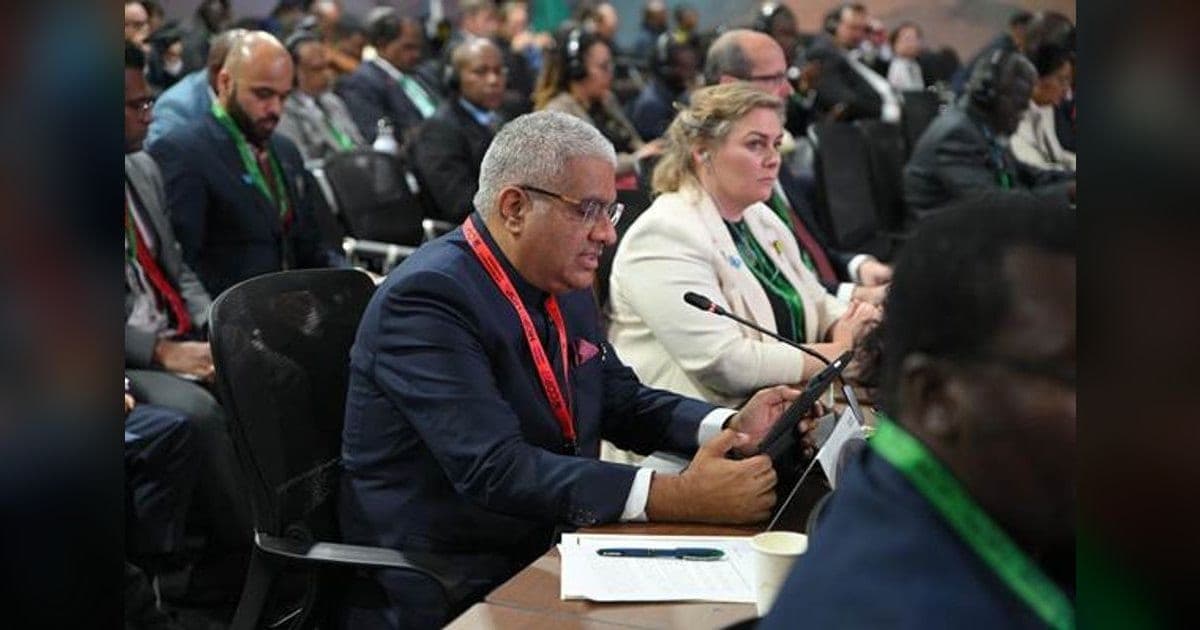
CBD COP-17: India Lists 1,134 Protected Areas at Yerevan
27 October 2026 · 2 min read
- Summits & Conferences
India Hosts 61st CIML Meeting in New Delhi for First Time
26 October 2026 · 3 min read
- Summits & Conferences
12th BRICS Parliamentary Forum Under India's Chairship
26 October 2026 · 2 min read
- Summits & Conferences
Urban Conclave 2026 Launches Used Water Marketplace, UCF Portal
25 October 2026 · 2 min read
Related GK
- Famous Personalities of Rajasthan: Exam Notes
28 October 2026 · Rajasthan
- Districts and Divisions of Rajasthan: Exam Notes
28 October 2026 · Rajasthan
- Tourism and World Heritage Sites of Rajasthan Notes
27 October 2026 · Rajasthan
Take the Quiz
- Current Affairs Quiz
State Exams Current Affairs Quiz: 28 October 2026
10 questions10 minutesStart Quiz