
MoSPI Releases Regional Accounts Sub-Committee Report
MoSPI released the Sub-Committee on Regional Accounts report for the 2022-23 National Accounts series, chaired by Prof Ravindra H. Dholakia of IIM Ahmedabad.
Why in News
On 25 November 2026 MoSPI released the report of the Sub-Committee on Regional Accounts, part of the revision of the National Accounts base year from 2011-12 to 2022-23.
The Ministry of Statistics and Programme Implementation, known as MoSPI, made public on 25 November 2026 the report of its Sub-Committee on Regional Accounts. The report belongs to the exercise of shifting the base year of National Accounts Statistics from 2011-12 to 2022-23.
How the exercise is organised
The choice of the financial year 2022-23 as the new base year was made by the Advisory Committee on National Accounts Statistics, or ACNAS, which works under the chairmanship of Prof B. N. Goldar. Five sub-committees were set up under ACNAS, each taking one part of the work of compiling and presenting national accounts:
- Incorporation of New Data Sources, Rates and Ratios
- Methodological Improvements
- Constant Price Estimates
- Regional Accounts
- SNA 2025 Update
What the Regional Accounts panel did
This sub-committee was asked to go over the concepts, definitions, classifications, data sources and estimation methods used for working out State Domestic Product (SDP) and District Domestic Product (DDP). It was chaired by Prof Ravindra H. Dholakia, a retired professor of the Indian Institute of Management, Ahmedabad. Those taking part included people from academia, the Reserve Bank of India, central ministries and departments, the Directorates of Economics and Statistics of states and union territories, NITI Aayog and officers of the National Statistics Office.
Its recommendations cover the compilation of state level estimates through all three routes, namely the production approach, the income approach and the expenditure approach, and also the method for district level estimates.
Methodological changes recommended
| Change | Effect |
| Direct estimation | Replaces allocation-based methods in some sectors and sub-sectors |
| Fewer fixed ratios | Lower dependence on ratios and proxies |
| State-wise data | Better use of state level information on economic activity |
| Consistency | Greater uniformity of method across states |
Uniform guidelines for compiling Gross State Value Added, or GSVA, under the production approach were put on the ministry website in September 2026, and the guidelines for district estimates earlier, in June 2026. Draft guidelines for GSVA under the expenditure approach went up in October 2026 with comments invited from stakeholders, and the final version is to follow. The report is expected to work as a reference for state and union territory statistical directorates as they strengthen their own systems under the revised series.
Important Facts
| Report | Sub-Committee on Regional Accounts, for the 2022-23 series of National Accounts |
|---|---|
| Ministry | Ministry of Statistics and Programme Implementation (MoSPI) |
| Base year change | From 2011-12 to 2022-23 |
| Advisory committee | ACNAS, chaired by Prof B. N. Goldar |
| Sub-committee chairman | Prof Ravindra H. Dholakia, retired professor, IIM Ahmedabad |
| Scope | State Domestic Product (SDP) and District Domestic Product (DDP) |
| Approaches covered | Production, income and expenditure |
| Sub-committees under ACNAS | Five in all, including the SNA 2025 Update panel |
| Date of release | 25 November 2026 |
Exam Point of View
Remember the ministry (MoSPI), the old and new base years (2011-12 to 2022-23), the advisory committee (ACNAS) and its chairman (Prof B. N. Goldar), the sub-committee chairman (Prof Ravindra H. Dholakia of IIM Ahmedabad), the two estimates reviewed (State Domestic Product and District Domestic Product), the three approaches, and the names of all five sub-committees.
Practice Questions
MoSPI is revising the base year of National Accounts Statistics from 2011-12 to which year?
- A.2019-20
- B.2020-21
- C.2022-23
- D.2024-25
Show answer
The Ministry of Statistics and Programme Implementation has taken up the revision of the base year of National Accounts Statistics from 2011-12 to 2022-23, and that financial year was fixed as the new base year by the Advisory Committee on National Accounts Statistics, abbreviated ACNAS, which works under the chairmanship…
Read the full explanation →Who chaired the Sub-Committee on Regional Accounts whose report MoSPI released?
- A.Prof B. N. Goldar
- B.Prof Ravindra H. Dholakia
- C.Dr Saurabh Garg
- D.The Chief Statistician of India
Show answer
The correct answer is Prof Ravindra H. Dholakia, a retired professor of the Indian Institute of Management, Ahmedabad, who headed the Sub-Committee on Regional Accounts.
Read the full explanation →Which two sets of estimates were reviewed by the Sub-Committee on Regional Accounts?
- A.Wholesale and retail price indices
- B.State Domestic Product and District Domestic Product
- C.Gross National Income and Net National Income
- D.Index of Industrial Production and Consumer Price Index
Show answer
The sub-committee was constituted precisely to review the concepts, definitions, classifications, data sources and estimation methodologies used to compile these two sets of estimates, and its recommendations cover the production, income and expenditure approaches for state level figures as well as the method for district level figures.
Read the full explanation →Frequently Asked Questions
What is the new base year for National Accounts Statistics in India?
The base year is being revised from 2011-12 to 2022-23. The financial year 2022-23 was fixed as the new base year by the Advisory Committee on National Accounts Statistics, ACNAS, which is chaired by Prof B. N. Goldar.
Who chaired the Sub-Committee on Regional Accounts?
Prof Ravindra H. Dholakia, a retired professor of the Indian Institute of Management, Ahmedabad, chaired it. The panel reviewed the methodology for compiling State Domestic Product and District Domestic Product estimates under the revised base year.
What methodological improvements has the report recommended?
It recommends a shift from allocation-based methods to direct estimation in some sectors, lower reliance on fixed ratios and proxies, better use of state-wise information on economic activity, and greater consistency of method across states.
Sources
- https://www.pib.gov.in/PressReleasePage.aspx?PRID=2341138 (opens in a new tab) — Press Information Bureau
Current Affairs 25 November 2026
- Kashi Tamil Sangamam 5.0 Set for 28 November to 12 DecemberSummits & Conferences
- National Milk Day: India's Milk Output at 247.87 Million TonnesImportant Days
- Service Producer Price Index Out for Q2 of FY 2026-27Economy
- Cabinet Clears Rs 11,000 Crore CIE Manufacturing SchemeGovernment Schemes
- CCEA Clears Rs 2,014 Crore Doloo Greenfield Airport in AssamNational
- CCEA Clears Second Container Terminal at Kamarajar PortEconomy
- Exercise Suryakiran XX Begins in Nepal with 334 Indian TroopsDefence
- Cabinet Extends Postal Operations Scheme, Rs 1,141 CroreGovernment Schemes
Related Current Affairs
- Reports & Indices
PAIMANA Tracks 1,862 Projects Worth Rs 38.11 Lakh Crore
25 November 2026 · 2 min read
- Reports & Indices
ICMR SAMPADA Survey Puts Anaemia at 42% Among Young Children
23 November 2026 · 2 min read
- Reports & Indices
World Bank Report: 49.60 Crore Indians Exit Poverty Line
22 November 2026 · 2 min read
- Reports & Indices
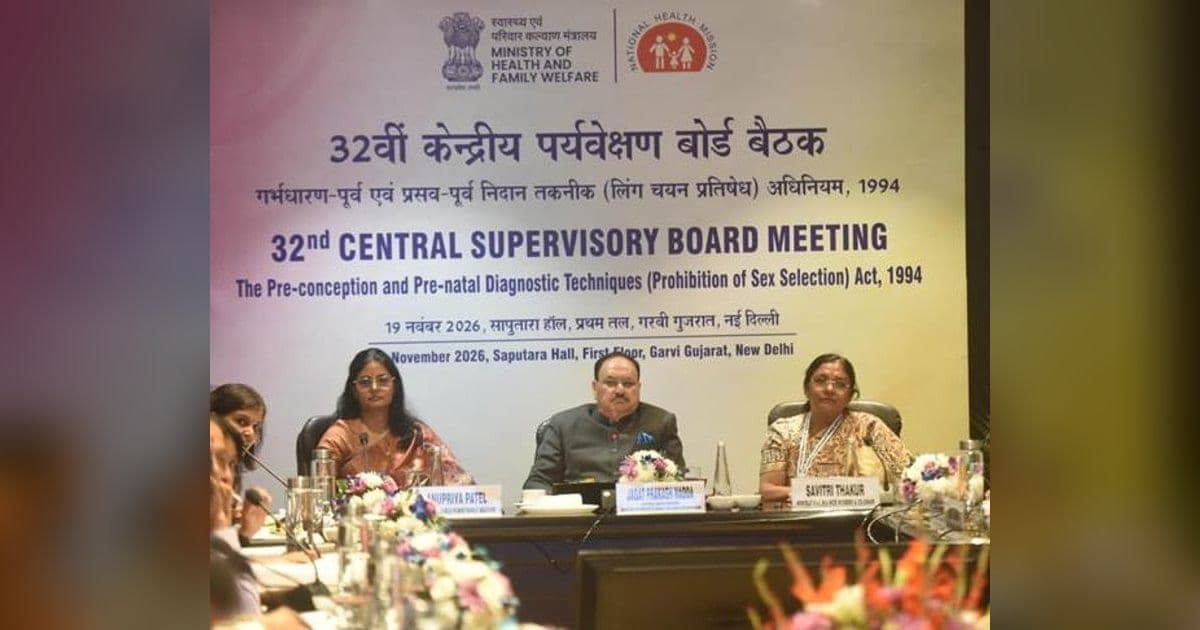
PC&PNDT Board Holds 32nd Meeting; Sex Ratio at Birth 918
19 November 2026 · 2 min read
- Reports & Indices
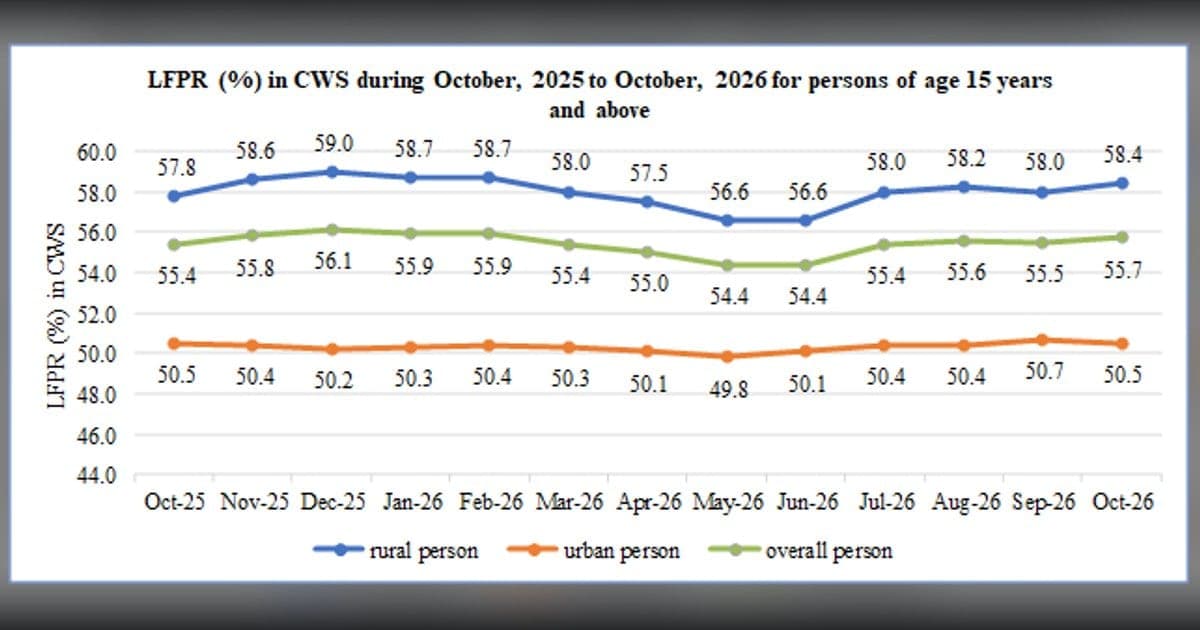
PLFS October 2026: Unemployment Rate Eases to 4.9 Per Cent
16 November 2026 · 2 min read
- Reports & Indices
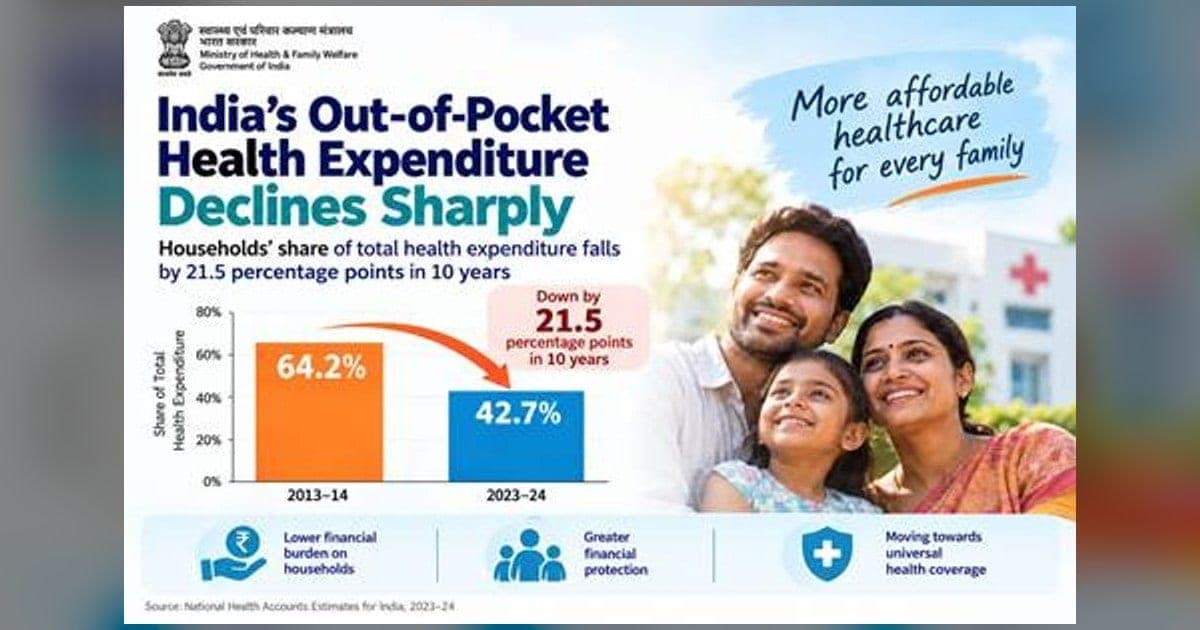
Out-of-Pocket Health Spending Falls to 42.7% in 2023-24
15 November 2026 · 2 min read
Related GK
- Famous Personalities of Rajasthan: Exam Notes
28 October 2026 · Rajasthan
- Districts and Divisions of Rajasthan: Exam Notes
28 October 2026 · Rajasthan
- Tourism and World Heritage Sites of Rajasthan Notes
27 October 2026 · Rajasthan
Take the Quiz
- Current Affairs Quiz
Banking Current Affairs Quiz: 25 November 2026
25 questions25 minutesStart Quiz