
DRI Seizes Red Sanders Worth Rs 7.72 Crore at Chennai Port
The DRI broke a red sanders smuggling syndicate at Chennai Port, seizing about 13,000 kg of logs worth Rs 7.72 crore and arresting three key members.
Why in News
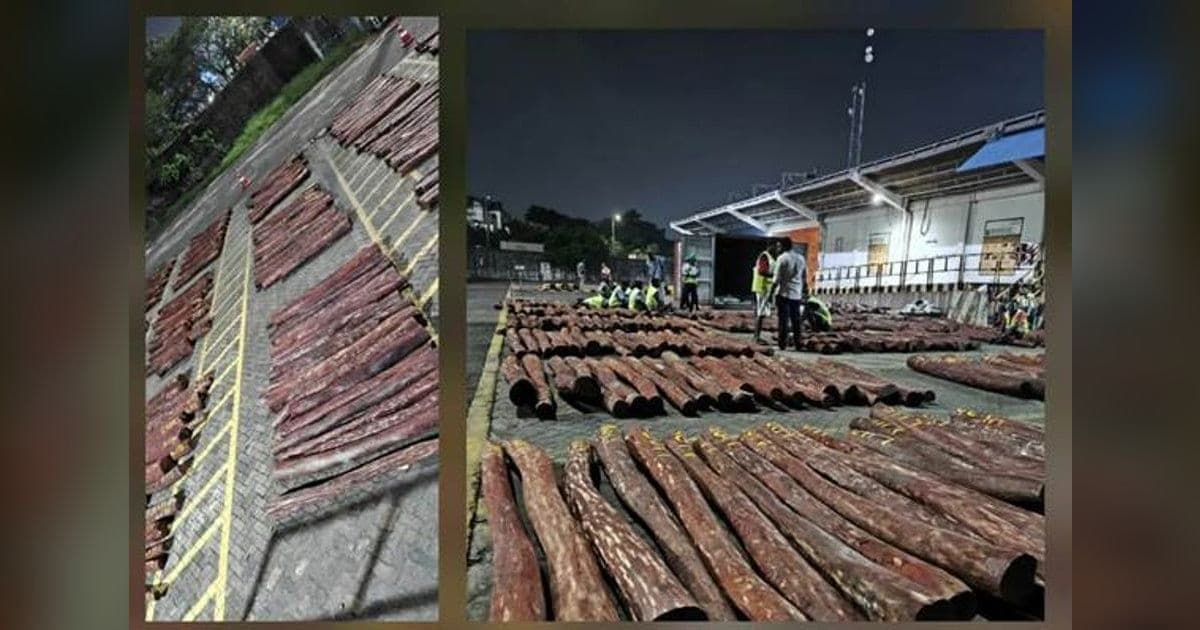
On 12 November 2026 the Directorate of Revenue Intelligence announced that it had busted a red sanders smuggling syndicate at Chennai Port, seizing about 13,000 kg of logs worth Rs 7.72 crore that were bound for Malaysia, and arresting three people.
Officers of the Directorate of Revenue Intelligence have broken up a Chennai-based syndicate that was trying to ship red sanders logs to Malaysia. Acting on specific intelligence, the officers held back an export container at Chennai Port between 9 and 11 November 2026, before it could be loaded onto the vessel.
What the container held
On paper the consignment was 'Paper Laminate Rolls'. A detailed examination carried out on 9 and 10 November 2026 found 12.87 metric tonnes - roughly 13,000 kg - of high-grade red sanders logs hidden inside, kept alongside a small quantity of the declared goods and some gravel stones to make the load look right. The wood is valued at about Rs 7.72 crore. Both the red sanders and the cover cargo were seized under the Customs Act, 1962.
How the syndicate worked
The preliminary investigation points to misuse of the self-sealing facility that a manufacturer-exporter is allowed to use. The group booked an export consignment through that exporter, then took the container away to a private godown, pulled out the declared paper laminate rolls, packed the red sanders logs in their place and sent the container on for export. When officers searched the godown later, they recovered the original declared cargo, an industrial weighing scale and traces of red sanders - evidence that matched the method they had reconstructed. Three key members of the syndicate have been arrested under the Customs Act, 1962.
Why red sanders is protected
Red sanders, whose botanical name is Pterocarpus santalinus, is a protected species. It is listed in Appendix II of the Convention on International Trade in Endangered Species of Wild Fauna and Flora, known as CITES, and in Schedule IV of the Wildlife (Protection) Act, 1972. Its export out of India is prohibited under the Foreign Trade Policy, which is why the consignment had to be disguised as something else.
The wider point
The case shows how legitimate export channels and trade facilitation measures - meant to cut delays for honest exporters - can be turned to organised wildlife trafficking. The agency said it would keep taking apart such networks through intelligence-led enforcement to protect the country's biodiversity.
Important Facts
| Agency | Directorate of Revenue Intelligence (DRI) |
|---|---|
| Place | Chennai Port |
| Dates of action | 9 to 11 November 2026, examination on 9 and 10 November |
| Seizure | 12.87 metric tonnes, about 13,000 kg of high-grade red sanders logs |
| Value | About Rs 7.72 crore |
| Declared as | Paper Laminate Rolls |
| Destination | Malaysia |
| Arrests | Three key syndicate members, under the Customs Act, 1962 |
| Species | Red sanders, Pterocarpus santalinus |
| Protection status | CITES Appendix II and Schedule IV of the Wildlife (Protection) Act, 1972 |
| Export status | Prohibited under the Foreign Trade Policy |
Exam Point of View
Remember the agency (Directorate of Revenue Intelligence), the port (Chennai), the quantity (12.87 metric tonnes, about 13,000 kg) and value (about Rs 7.72 crore), the destination (Malaysia), the false declaration ('Paper Laminate Rolls'), three arrests under the Customs Act, 1962, and the protection status of red sanders - CITES Appendix II and Schedule IV of the Wildlife (Protection) Act, 1972, with export barred under the Foreign Trade Policy.
Practice Questions
Red sanders, seized by the DRI at Chennai Port, is listed in which Schedule of the Wildlife (Protection) Act, 1972?
- A.Schedule I
- B.Schedule II
- C.Schedule III
- D.Schedule IV
Show answer
Red sanders, whose botanical name is Pterocarpus santalinus, is a protected species listed in Schedule IV of the Wildlife (Protection) Act, 1972, and also in Appendix II of the Convention on International Trade in Endangered Species of Wild Fauna and Flora, better known as CITES.
Read the full explanation →What was the quantity and value of the red sanders seized by the DRI at Chennai Port?
- A.About 8,000 kg worth Rs 4.50 crore
- B.About 13,000 kg worth Rs 7.72 crore
- C.About 18,000 kg worth Rs 9.20 crore
- D.About 22,000 kg worth Rs 12.40 crore
Show answer
The detailed examination put the exact weight at 12.87 metric tonnes of high-grade logs, which rounds to roughly 13,000 kg, and the value at approximately Rs 7.72 crore.
Read the full explanation →Which facility did the syndicate misuse to swap the cargo in the container, as per the preliminary investigation?
- A.The self-sealing facility of a manufacturer-exporter
- B.Duty drawback on exports
- C.Bonded warehousing
- D.Transhipment permission
Show answer
The investigation found that the group arranged an export consignment through such an exporter, took the container to a private godown, removed the declared paper laminate rolls and packed red sanders logs in their place before sending it on for export.
Read the full explanation →Frequently Asked Questions
How much red sanders was seized by the DRI at Chennai Port?
About 13,000 kg - 12.87 metric tonnes - of high-grade red sanders logs, valued at roughly Rs 7.72 crore. The consignment had been declared as 'Paper Laminate Rolls' and was meant for Malaysia.
Under which laws is red sanders protected?
Red sanders, botanically Pterocarpus santalinus, is listed in Appendix II of CITES and in Schedule IV of the Wildlife (Protection) Act, 1972. Its export from India is prohibited under the Foreign Trade Policy.
How did the smuggling syndicate operate?
It exploited the self-sealing facility available to a manufacturer-exporter, arranged an export consignment through that exporter, diverted the container to a private godown and replaced the declared paper laminate rolls with red sanders logs before sending it for export. A later search of the godown recovered the original cargo, an industrial weighing scale and traces of red sanders.
Sources
- https://pib.gov.in/PressReleasePage.aspx?PRID=2335529 (opens in a new tab) — Press Information Bureau
Current Affairs 12 November 2026
- One Nation One Ration Card Reaches All 36 States and UTsGovernment Schemes
- National Naturopathy Day 2026 Set for 18 November in KarnatakaImportant Days
- Buddha's Sacred Relics Draw 50,000 Devotees in ArunachalNational
- Rajnath Singh Opens Air Force Commanders' Conference 2026 in DelhiDefence
- TDB Gives Rs 64.05 Crore for Astrome AI-ELINT Satellite ProjectScience & Technology
- INSA Endorses S20 Joint Statement Ahead of G20 Summit in MiamiSummits & Conferences
- 57th IFFI Goa 2026: WaveX Startup Pavilion Entries Close 13 NovemberNational
- Retail Inflation Rises to 6.09% in October 2026, Food at 8.94%Economy
Related Current Affairs
- Environment
India Seeks Fair, Ambitious Outcome at UNFCCC COP31 in Antalya
10 November 2026 · 2 min read





Related GK
- Famous Personalities of Rajasthan: Exam Notes
28 October 2026 · Rajasthan
- Districts and Divisions of Rajasthan: Exam Notes
28 October 2026 · Rajasthan
- Tourism and World Heritage Sites of Rajasthan Notes
27 October 2026 · Rajasthan
Take the Quiz
- Current Affairs Quiz
Banking Current Affairs Quiz: 12 November 2026
25 questions25 minutesStart Quiz