
Skip to content
GK24

Current Affairs 19 September 2026: Today's GK & MCQs

4 updates· 11 MCQsLast updated

The current affairs for 19 September 2026 cover 4 stories and 11 practice questions. The edition covers Defence, Appointments, Government Schemes, Economy. Every fact is drawn from an official government release, and each article cites the release it came from. Candidates preparing for SSC, Banking, UPSC, Railway and State exams can use the one-liners below for a quick revision of the day.

Quiz of the day11 questions · 11 minutesStart Quiz

Top Headlines

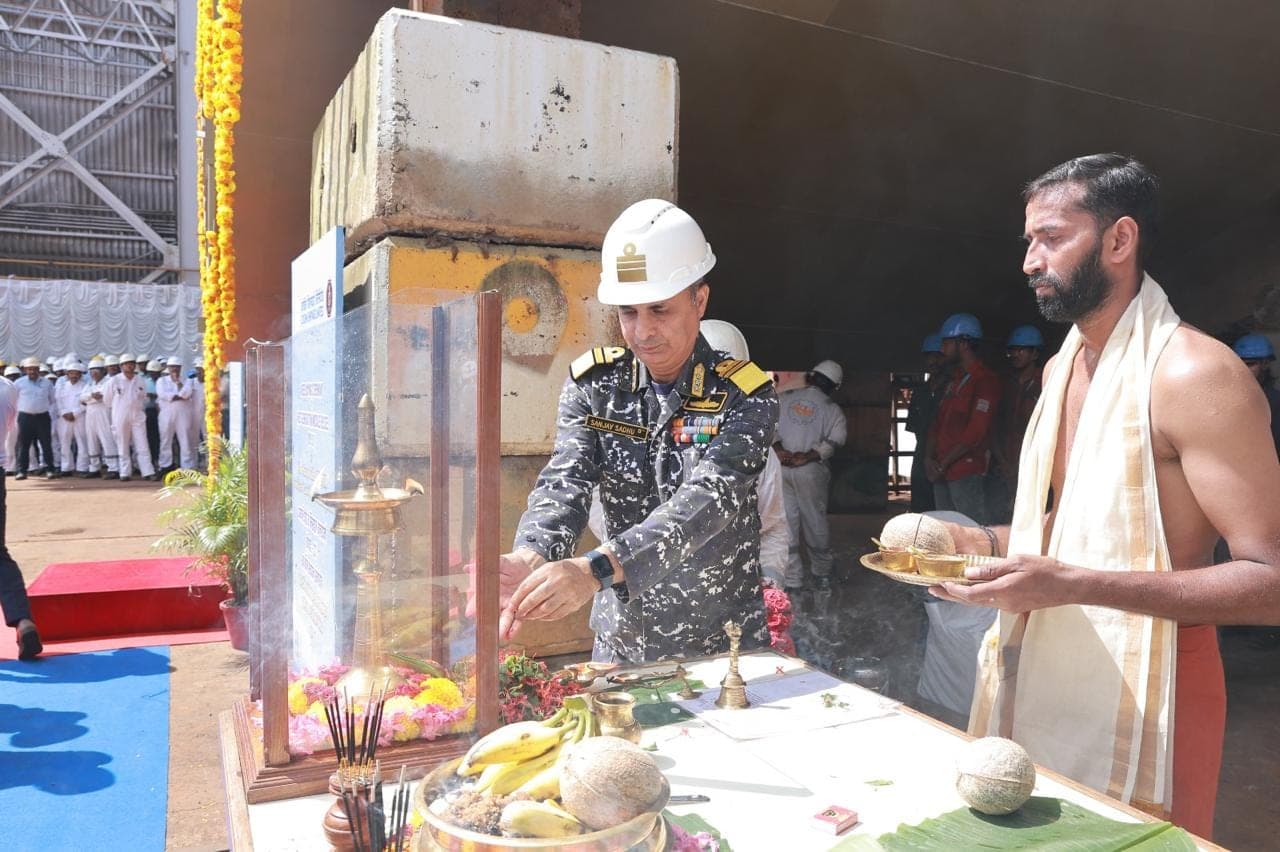
  1. Indian Navy's First NGMV Keel Laid at Cochin Shipyard, Kochi
  2. President Appoints 14 Judges to Four High Courts
  3. DDU-GKY 2.0 Training to Begin in 14 States from October
  4. NLMC Board Clears Assets Worth Over Rs 5,000 Crore

One-liner Current Affairs

  • Keel of the Indian Navy's first Next Generation Missile Vessel laid at Cochin Shipyard Limited, Kochi
  • The ceremony was held on 18 September 2026, with Vice Admiral Sanjay Sadhu as Chief Guest
  • The NGMV construction contract was concluded with Cochin Shipyard Limited in March 2023
  • All major role-defining equipment on the vessels is indigenously developed and manufactured
  • The Ministry links the project to Aatmanirbhar Bharat, Make in India and Make for the World
  • Fourteen judicial officers have been appointed to four High Courts
  • The Delhi High Court receives seven, two as Judges and five as Additional Judges
  • Three go to the Jharkhand High Court as Judges and three to Karnataka as Additional Judges
  • One officer becomes a Judge of the High Court of Jammu and Kashmir and Ladakh
  • The President made the appointments after consulting the Chief Justice of India
  • DDU-GKY 2.0 training batches begin in October 2026 across most States and Union Territories
  • The first round covers 1,164 batches with 34,920 rural youth in fourteen States and UTs
  • The sanctioned target for those fourteen is 3,57,112 candidates by 31 December 2027
  • 24 States and UTs have allocated 5.6 lakh targets across more than 1,200 projects
  • DDU-GKY is a Centrally Sponsored Scheme offering placement-linked training of three to twelve months
  • The 21st board meeting of the National Land Monetization Corporation was held on 18 September 2026
  • Proposals covering assets worth over Rs 5,000 crore were recommended for monetisation
  • The assets are surplus land and buildings identified for the purpose
  • NLMC helps Central Public Sector Enterprises and other government entities monetise surplus assets
  • The board approved the Annual Financial Statements and Directors' Report for 2025-26

Appointments

View all

Government Schemes

View all

Today's MCQs

Q1.DefenceEasy

At which shipyard was the keel of the Indian Navy's first Next Generation Missile Vessel laid?

  1. A.Mazagon Dock Shipbuilders, Mumbai
  2. B.Cochin Shipyard Limited, Kochi
  3. C.Garden Reach Shipbuilders, Kolkata
  4. D.Hindustan Shipyard, Visakhapatnam
Show answer

Correct answer: B. Cochin Shipyard Limited, Kochi

Explanation

The correct answer is Cochin Shipyard Limited, Kochi. The Ministry of Defence stated that the keel laying ceremony of the first ship of the Indian Navy's Next Generation Missile Vessel project was held at Cochin Shipyard Limited in Kochi on 18 September 2026, with Vice Admiral Sanjay Sadhu, Controller of Warship Production and Acquisition, as the Chief Guest. The contract for construction of the NGMVs had been concluded with Cochin Shipyard Limited in March 2023, so the same yard that holds the contract also laid the keel.

The other options name shipyards that the release does not connect with this ceremony. Mazagon Dock Shipbuilders in Mumbai, Garden Reach Shipbuilders in Kolkata and Hindustan Shipyard in Visakhapatnam are not mentioned anywhere in the Ministry's statement on this event, and attributing the NGMV keel laying to any of them would be incorrect. For the examination, the pairing to memorise is straightforward: NGMV project, first ship, Cochin Shipyard Limited, Kochi, 18 September 2026.

Q2.DefenceMedium

In which month and year was the contract for construction of the Next Generation Missile Vessels concluded?

  1. A.March 2023
  2. B.March 2021
  3. C.September 2026
  4. D.August 2024
Show answer

Correct answer: A. March 2023

Explanation

The correct answer is March 2023. The Ministry of Defence release states that the contract for construction of the NGMVs was concluded with Cochin Shipyard Limited in March 2023. The keel laying of the first ship then took place on 18 September 2026, so candidates should keep the two dates separate: the contract date marks the order, while the keel laying date marks the formal start of construction on the slipway.

Option C, September 2026, is the month of the keel laying ceremony rather than of the contract, and it is the most likely confusion in this question. Options B and D give years that the release does not associate with the NGMV contract at all. Examiners frequently test exactly this distinction between the year an order was placed and the year construction began, so note both dates together along with the yard, Cochin Shipyard Limited, and the ministry concerned, the Ministry of Defence.

Q3.AppointmentsEasy

How many judicial officers were appointed as Judges and Additional Judges in the September 2026 announcement?

  1. A.Ten
  2. B.Twelve
  3. C.Fourteen
  4. D.Sixteen
Show answer

Correct answer: C. Fourteen

Explanation

The answer is fourteen. The Ministry of Law and Justice announced the elevation of fourteen serving judicial officers, spread over four High Courts. The largest share went to Delhi, which took seven of them, two as Judges and five as Additional Judges. Jharkhand received three as Judges, Karnataka three as Additional Judges, and one officer was appointed a Judge of the High Court of Jammu and Kashmir and Ladakh.

Adding those up is the safest way to hold the figure: seven and three and three and one. Candidates who remember only the number of courts, which is four, or only the Delhi share, which is seven, will miss this. The other options are round numbers close enough to be tempting but none of them matches the announcement.

Q4.AppointmentsMedium

Under the Constitution, who appoints Judges of a High Court, and after consulting whom?

  1. A.The Prime Minister, after consulting the Law Minister
  2. B.The President, after consulting the Chief Justice of India
  3. C.The Chief Justice of India, after consulting the President
  4. D.The Governor of the State, after consulting the High Court Chief Justice
Show answer

Correct answer: B. The President, after consulting the Chief Justice of India

Explanation

The answer is the President, after consulting the Chief Justice of India. The release is explicit on both halves: the power is one the Constitution confers on the President, and it is exercised after consultation with the Chief Justice of India. The order of those two steps matters, because a question will sometimes reverse them.

Option C does exactly that reversal and is the strongest distractor. The Prime Minister and the Law Minister have no constitutional role in the appointment itself, which rules out option A. A Governor does figure in consultation for High Court appointments under the constitutional scheme, but the appointing authority is not the Governor, so option D fails on the same point. Hold the pair as consultation first, warrant afterwards.

Q5.AppointmentsMedium

Which High Court received the largest number of the fourteen appointments?

  1. A.Karnataka High Court
  2. B.Jharkhand High Court
  3. C.Delhi High Court
  4. D.High Court of Jammu and Kashmir and Ladakh
Show answer

Correct answer: C. Delhi High Court

Explanation

The answer is the Delhi High Court, which received seven of the fourteen, half the total on its own. Of those seven, two were appointed as Judges and the other five as Additional Judges, a split the release sets out separately and which is itself worth noting.

The remaining seven were divided three ways. Jharkhand took three as Judges, Karnataka took three as Additional Judges, and the High Court of Jammu and Kashmir and Ladakh took one as a Judge. That last court is worth a second look for a different reason: a single High Court serves both Union Territories, which is a fact examiners like on its own. So the order by size runs Delhi, then Jharkhand and Karnataka level, then Jammu and Kashmir and Ladakh.

Q6.Government SchemesMedium

How many rural youth will begin training in the first round of DDU-GKY 2.0 in October 2026?

  1. A.34,920
  2. B.3,57,112
  3. C.1,164
  4. D.5.6 lakh
Show answer

Correct answer: A. 34,920

Explanation

The answer is 34,920. Four figures travel together in this item and the question turns on keeping them apart. 34,920 is the number of rural young people starting training in October 2026; 1,164 is the number of batches they are divided into; 3,57,112 is the far larger sanctioned target for the same fourteen States and Union Territories, to be met by 31 December 2027; and 5.6 lakh is the total already allocated across more than 1,200 projects by 24 States and Union Territories.

So option C is the batch count, option B is the sanctioned target and option D is the wider allocation, each a real figure from the announcement but an answer to a different question. A useful ordering is smallest to largest: batches, then the October intake, then the sanctioned target, then the national allocation.

Q7.Government SchemesMedium

Which ministry implements the Deen Dayal Upadhyaya Grameen Kaushalya Yojana?

  1. A.Ministry of Skill Development and Entrepreneurship
  2. B.Ministry of Rural Development
  3. C.Ministry of Labour and Employment
  4. D.Ministry of Education
Show answer

Correct answer: B. Ministry of Rural Development

Explanation

The answer is the Ministry of Rural Development, which is reviewing State readiness and rolling out the second phase of the scheme. The placement of DDU-GKY under Rural Development rather than under Skill Development is the point worth fixing in memory, because the name contains the word Kaushalya and the obvious guess is therefore wrong.

The clue is in the rest of the name: Grameen. The scheme is aimed at poor rural youth specifically, which is what puts it in the rural development portfolio. It is a Centrally Sponsored Scheme, its training is tied to placement rather than ending at a certificate, and courses run from three months up to twelve. The other ministries listed all work on employment or training in some form, which is exactly what makes them effective distractors.

Q8.Government SchemesHard

What is the sanctioned training target for the fourteen States and UTs reviewed in the first phase?

  1. A.34,920 rural youth by December 2026
  2. B.1,164 rural youth by December 2027
  3. C.3,57,112 rural youth by 31 December 2027
  4. D.5.6 lakh rural youth, with no deadline stated
Show answer

Correct answer: C. 3,57,112 rural youth by 31 December 2027

Explanation

The answer is 3,57,112 rural youth by 31 December 2027. This is the sanctioned target for the fourteen States and Union Territories reviewed in the first phase, and it sits well above what actually starts in October 2026, which is 34,920 young people in 1,164 batches. The gap between the two figures is the point of the review: the Ministry is pressing States to move faster so the target is reached in time.

Each wrong option pairs a real figure with the wrong deadline or the wrong scope. The 5.6 lakh in option D belongs to the national allocation across more than 1,200 projects by 24 States and Union Territories, not to these fourteen. Targets for the second phase run over the two-year period 2026-28 and cover all 31 participating States and Union Territories.

Q9.EconomyMedium

What was the value of the monetisation proposals recommended at NLMC's 21st board meeting?

  1. A.Over Rs 1,000 crore
  2. B.Over Rs 5,000 crore
  3. C.Over Rs 10,000 crore
  4. D.Over Rs 50,000 crore
Show answer

Correct answer: B. Over Rs 5,000 crore

Explanation

The answer is over Rs 5,000 crore. At its twenty-first board meeting, held on 18 September 2026, the National Land Monetization Corporation considered and recommended proposals covering assets of that value. What those assets are matters as much as the figure: surplus land and buildings, identified because they no longer serve the purpose they were acquired for.

The remaining options are round figures of the kind that make plausible distractors in a question about money, but none of them appears in the announcement. Two details are worth carrying with the figure, since a question may ask for either instead: it was the twenty-first meeting of the board, and the same sitting approved the Annual Financial Statements and Directors' Report for 2025-26.

Q10.EconomyMedium

Whose surplus assets does the National Land Monetization Corporation help monetise?

  1. A.State government departments only
  2. B.Private companies in financial distress
  3. C.Central Public Sector Enterprises and other government entities
  4. D.Municipal corporations and urban local bodies
Show answer

Correct answer: C. Central Public Sector Enterprises and other government entities

Explanation

The answer is Central Public Sector Enterprises and other government entities. NLMC does not simply buy and sell. It works alongside whichever body owns the property, identifying which assets are suitable, carrying out due diligence, arranging a valuation and then structuring the process, with transparency, efficiency and value realisation as its stated priorities.

The other options describe owners the release does not mention. Option B in particular points in the wrong direction entirely, since this is public property being put to use, not a rescue of private firms. The purpose behind the whole exercise is worth remembering alongside the answer: unlocking the value of assets that sit underused on government books, which is why the corporation exists at all.

One more point of wording: monetisation is not always a sale. Depending on the structure, the state may lease an asset or take in a partner while keeping the title, so ownership does not necessarily change hands.

Q11.EconomyMedium

For which financial year did the NLMC board approve the Annual Financial Statements and Directors' Report?

  1. A.2023-24
  2. B.2024-25
  3. C.2025-26
  4. D.2026-27
Show answer

Correct answer: C. 2025-26

Explanation

The answer is 2025-26. Alongside the monetisation proposals, the twenty-first board meeting cleared the Annual Financial Statements and the Directors' Report for that financial year. These are routine items of corporate business, but they are exactly the kind of specific that a question will pick out precisely because candidates skim past them.

Option D is the strongest distractor, since the meeting itself took place during that year rather than after it, and accounts are approved for a year that has closed rather than one still running. Hold the three specifics from this meeting together and the whole item is covered: the twenty-first board meeting, assets worth over Rs 5,000 crore recommended, and accounts approved for 2025-26.

A small habit helps with items like this: when a release names a financial year, note whether it has closed or is still running, because that alone usually settles the question.

Quiz of the day

More current affairs